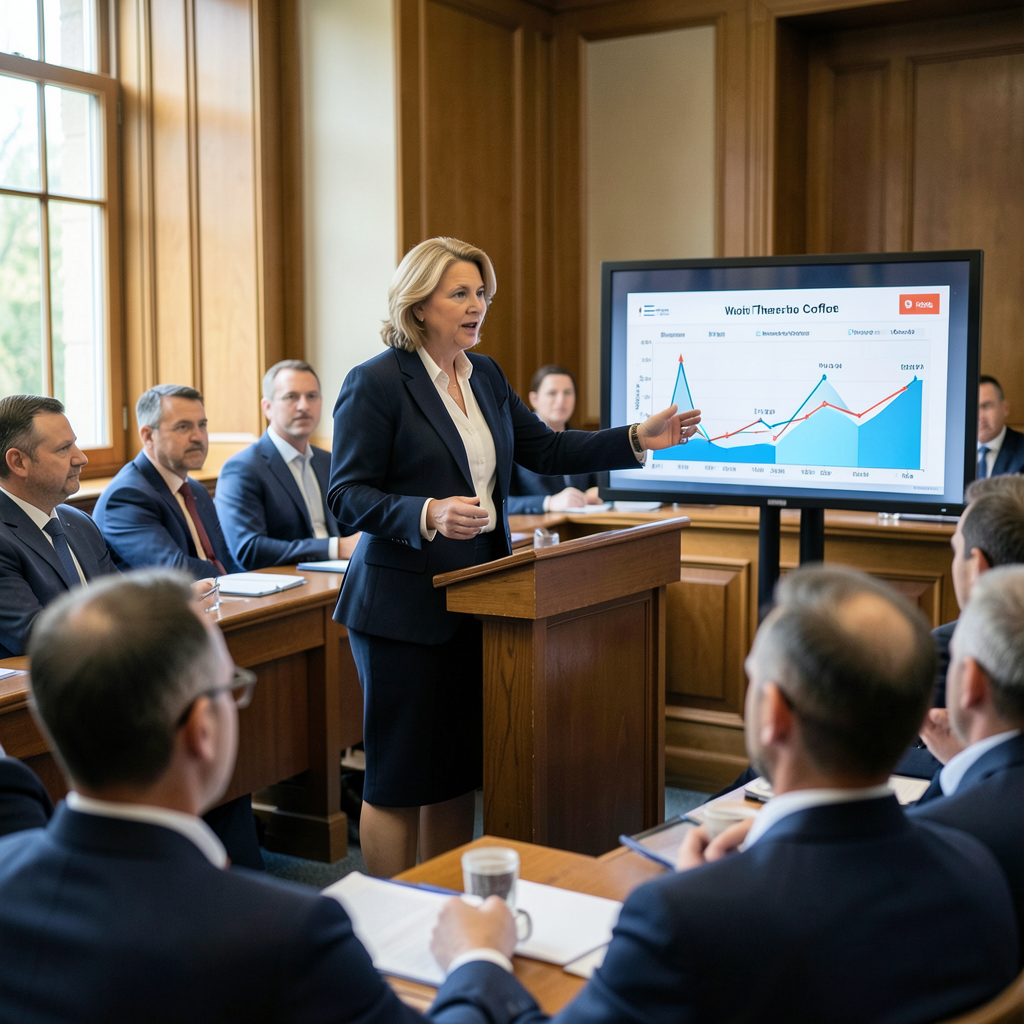

The State Pension triple lock mechanism could potentially be substituted with a modified double lock framework, according to remarks from a former Conservative pensions secretary.
The observation represents a significant development for the millions of individuals currently receiving the State Pension.
Baroness Therese Coffey occupied the position of Department for Work and Pensions secretary between 2019 and 2022, simultaneously serving as deputy prime minister.
She indicated that the triple lock arrangement warranted reassessment and described the guaranteed 2.5 percent yearly increment as potentially appropriate when initially implemented, suggesting the mechanism had substantially fulfilled its original objective.
Lady Coffey expressed preference for implementing an alternative double lock structure instead.
These remarks emerged amid escalating scrutiny directed at the triple lock policy, with numerous senior political figures advocating for fundamental changes to the existing arrangement.
The State Pension triple lock was established by the Conservative-Liberal Democrat coalition administration in 2010.
The mechanism ensures that the State Pension increases annually by whichever figure proves highest among inflation, average earnings growth, or 2.5 percent.
The policy’s intended purpose involved safeguarding pensioners against declining purchasing power relative to either prices or wages.
Opponents of the arrangement have increasingly questioned whether the system remains economically sustainable given the expanding pensioner demographic and escalating State Pension expenditure.
Addressing the House of Lords on Friday, Lady Coffey observed that the triple lock frequently attracted criticism for numerous issues.
She indicated personal preference for a modified double lock approach, noting that the 2.5 percent provision likely represented a sensible measure during implementation to accelerate pension progression relative to earnings levels, and that this objective had been substantially accomplished.
Lady Coffey’s contribution formed part of parliamentary proceedings concerning a committee report assessing the United Kingdom’s readiness for demographic ageing.
Peers representing diverse political positions voiced anxieties regarding the triple lock’s long-term viability.
Lord Jim O’Neill, an associate of Andy Burnham, suggested that financial markets would respond positively to government action addressing perceived excessive spending within the triple lock or broader welfare expenditure.
Sir Howard Davies, who previously chaired NatWest, cautioned that the nation could not sustain such commitments and that governmental credibility faced substantial risk absent corrective measures.
Conservative peer Lord Tugendhat contended that while the triple lock had been essential upon introduction, removal should proceed promptly.
Crossbench peer Lord Turnbull, a former civil service head, characterised the present arrangement as fundamentally unreasonable, describing it as a disorderly mechanism producing unpredictable benefits that invariably favoured recipients depending on specific earnings and price movements in particular years.
Lord Turnbull cited Office for Budget Responsibility projections indicating potential additional expenditure equivalent to 2 percent of gross domestic product.
Lord Reid of Cardowan, a former Labour home secretary, expressed the view that the report ought to address the triple lock question with considerably greater directness.
Not all participants supported eliminating the triple lock.
Lord Redwood, a former Conservative Welsh secretary, maintained that terminating the arrangement would prove regrettable, asserting it had contributed to reducing pensioner deprivation.
Lord Liddle, the Labour peer responsible for introducing the report, acknowledged personal reservations about insufficient direct engagement with the triple lock issue and sounded alarms regarding the United Kingdom’s readiness for an ageing population, describing the absence of any published ageing strategy as concerning and indicating the government appeared reluctant to confront these challenges as urgent priorities.
Despite mounting criticism, the government has indicated no imminent intention to abolish the triple lock.
Treasury minister Lord Pitt-Watson stated during the debate that the triple lock featured within Labour’s electoral commitments and would persist until the current parliamentary term concluded.
The arrangement therefore appears set to continue for the present moment, notwithstanding increasingly vocal calls from senior figures favouring reconsideration.
For pensioners, this parliamentary discussion may prove consequential in subsequent years as ministers confront intensifying pressure regarding expenditure necessary to support an ageing demographic.