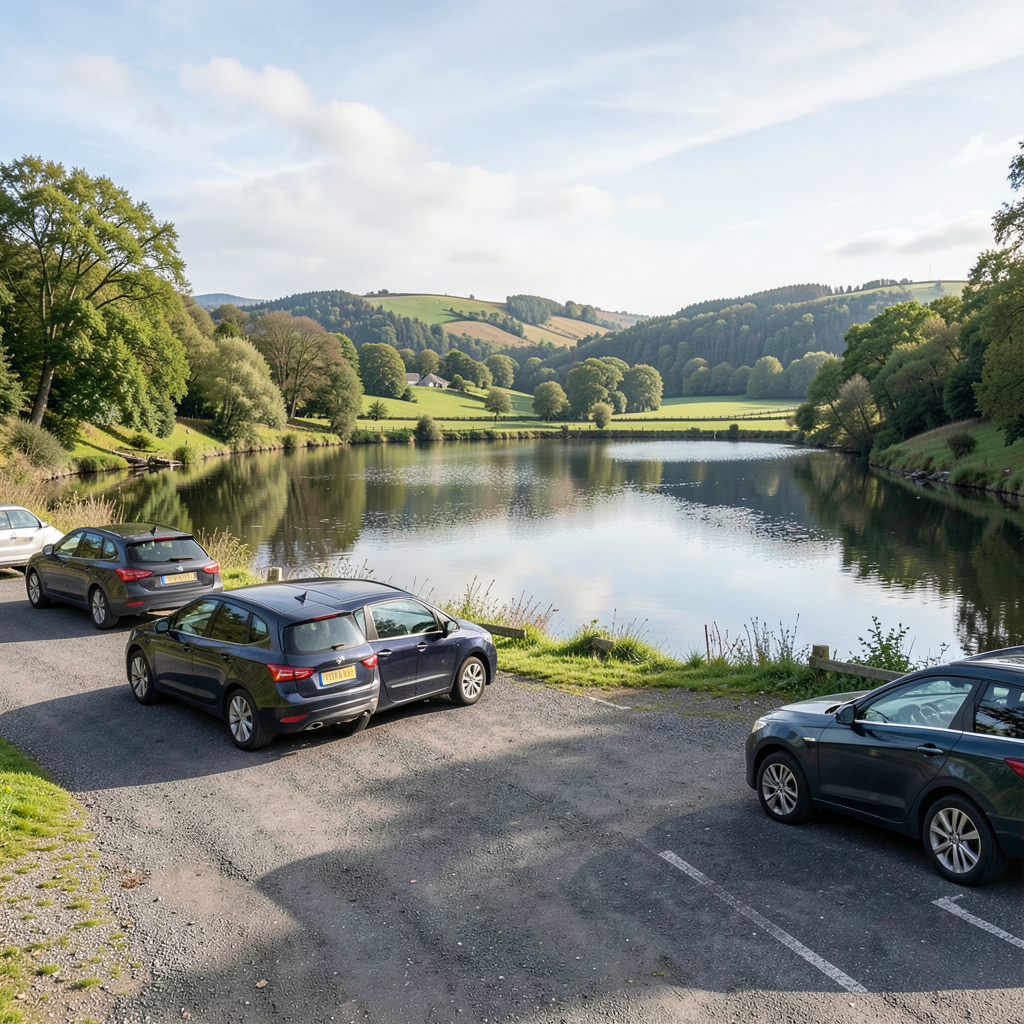

Yorkshire Water has announced that parking fees will continue to be levied at three well-used reservoirs in the Washburn Valley following an extensive pilot programme.
The decision means that visitors to Swinsty, Fewston, and Thruscross reservoirs will continue to pay for parking.
The charging scheme was initially implemented in 2024, with revenue directed toward conservation initiatives, countryside stewardship, and the employment of the utility company’s inaugural dedicated ranger service.
According to Yorkshire Water, the programme has enabled significant environmental and accessibility improvements across the sites.
Fee structures remain unchanged, with one-hour parking priced at one pound, six-hour parking at three pounds, and full-day parking at five pounds.
Annual permits continue to be offered at thirty pounds, while Blue Badge holders are exempt from charges.
Following the introduction of the scheme, some motorists opted to leave vehicles on nearby roads rather than pay the fee.
At Swinsty and Fewston reservoirs, payment terminals were subject to deliberate damage at the commencement of charging, a situation that necessitated increased police presence in the vicinity.
Lee Otter, who serves as head of land and property at Yorkshire Water, explained that the reservoirs serve as valuable green spaces for residents and tourists alike, and that the modest parking fee has empowered rangers to undertake a variety of enhancement projects.
The funding has specifically supported the work of the ranger team in maintaining and improving the areas.
Improvements delivered through the charging initiative have included resurfacing work on the path circuit surrounding Fewston Reservoir, with particular attention given to accessibility for visitors with disabilities.
Increased regularity of site assessments has also allowed maintenance problems to be detected and addressed more promptly.
The ten-person ranger unit, whose salaries are funded through the parking charges, collaborates with community volunteers and external organisations on habitat management, removal of non-native plant species, wildflower planting schemes, path maintenance, and wildlife monitoring.
The team additionally delivers learning activities for educational institutions and families, comprising guided walks focused on mental wellbeing and hands-on nature craft workshops.
David Spencer, who holds the position of lead ranger at Yorkshire Water, noted that expanding and strengthening the team over the past three years has enabled a more comprehensive approach to land management around the reservoirs, as well as greater promotion of community engagement with local natural environments.
Revenue generated from future parking charges will sustain the ranger service and fund additional conservation and upkeep activities at the reservoirs.
The parking operation will continue to be overseen by Bransby Wilson.
Mr Otter expressed the hope that visitors have observed the beneficial changes implemented since the introduction of parking charges, stating that efforts to enhance access, ecological habitats, and community enjoyment of the facilities would persist.