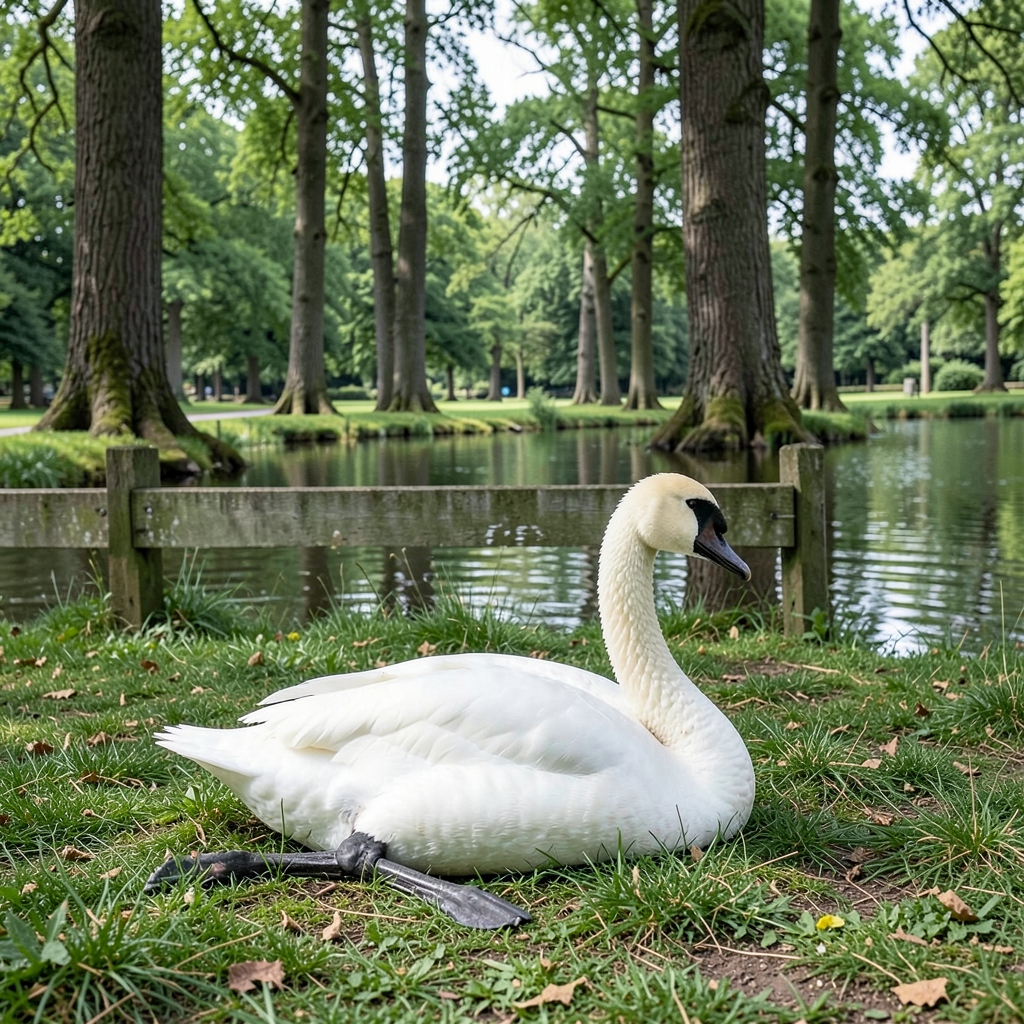

A mute swan has been discovered dead and headless in Roundhay Park, according to authorities.
The carcass was located close to a wooden barrier in the park’s nature reserve section.
West Yorkshire Police announced the discovery on Monday, September 21, via social media.
The force stated that the swan had been killed and its head removed in the vicinity of the barrier designed to prevent boats from entering the protected area.
The force urged anyone with information about the incident or a more precise timeline of when it occurred to contact the non-emergency number 101 and reference the investigation number 13260536269.
Online speculation emerged regarding the swan’s death.
One social media commentator suggested that raptors like hawks, falcons, and owls typically target the head due to its high nutritional content and lighter weight compared to the entire bird.
Another theory involved foxes as possible perpetrators.
A counterargument emerged challenging the fox hypothesis.
One user disputed this claim, asserting that fox predation on adult swans is a misconception, as these canids face significant risk of injury when confronting such large birds and typically opt for smaller, more vulnerable prey.
The precise cause of the swan’s demise and the location of its severed head remain unclear.
It has not been confirmed whether the head was discovered alongside the body or removed entirely.
Authorities acknowledge multiple possible explanations for the headless condition.
The swan may have succumbed to natural causes, sustained fatal injuries from another source, or collided with an object, after which its remains were scavenged.
Potential scavengers include foxes, domestic dogs, mink, otters, crows, gulls, birds of prey, rats, and other opportunistic feeders.
Crucially, the absence of the head does not constitute evidence that a fox or any other predator killed the bird, as the swan could have died first from illness, injury, or collision.
Members of the public who encounter a deceased swan are advised to refrain from handling the animal and to notify either a local wildlife rescue organisation or the appropriate council authority.