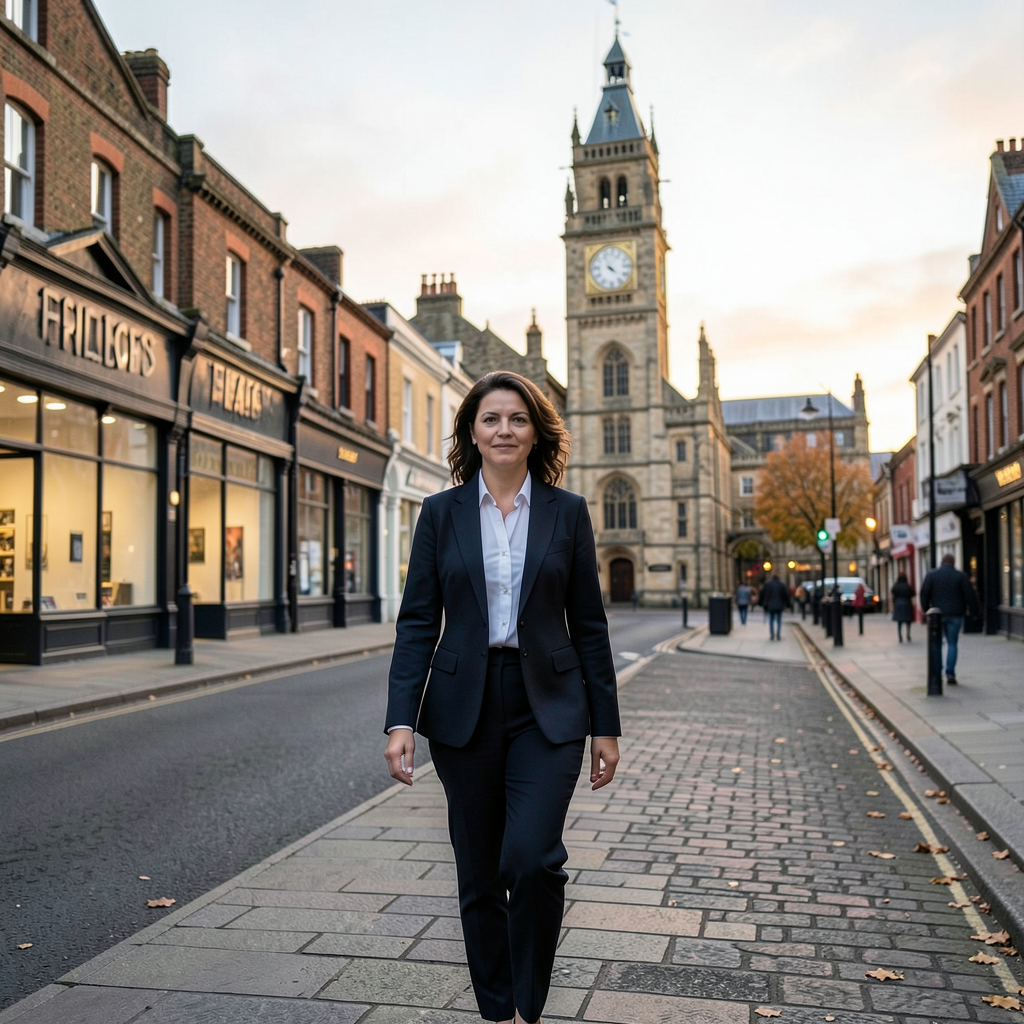

Disagreement emerged among senior Reform councillors regarding assertions that Bradford has reached a turning point.
One elected member stated that she no longer feels comfortable navigating the city centre without accompaniment.
Another participant suggested that individuals with financial resources are avoiding the area entirely.
The exchanges occurred during a session of the Bradford Wellbeing Board, where representatives from various organisations across the district gathered to assess current conditions.
Attendees received information indicating that criminal activity in Bradford has declined according to official statistics.
Chief Superintendent Richard Padwell informed the board that alongside falling crime rates, recent data suggested residents were beginning to experience greater feelings of safety within the city centre.
However, several Reform councillors challenged these assertions.
Councillor Sally Birch, representing Windhill and Wrose, stated that she no longer considers it safe to walk through the city centre unaccompanied.
An update was provided by the Bradford Community Safety Partnership, which identified public perception of Bradford as an unsafe location as one of the most significant challenges facing the district.
Michael Churley, speaking for the Partnership, explained that while crime rates have decreased substantially over time, this positive trend does not necessarily align with how residents perceive the situation.
Vehicle-related offences, theft, and residential burglaries have all declined markedly.
Despite this, approximately 65 percent of the population believe criminal activity has risen.
Addressing this perception discrepancy was described as a collective responsibility, with Mr Churley noting that many residents remain unaware of the actual downward trajectory of crime.
Dr Sohail Abbas, Director of Population Health and Inequalities at Bradford District and Craven Health and Care Partnership, inquired about potential strategies for addressing perception issues, observing that social media platforms frequently amplify negative narratives.
Chief Superintendent Richard Padwell of West Yorkshire Police indicated that the West Yorkshire Combined Authority had recently conducted a community confidence survey, with findings expected to be released shortly.
The superintendent disclosed having reviewed the results, which involved questioning hundreds of Bradford residents.
He described the findings as showing notable improvements in confidence, safety, and quality of life within Bradford, exceeding levels recorded in other parts of West Yorkshire.
The superintendent attributed part of this progress to the City of Culture initiative, noting that police intervention requirements during related events remained minimal.
Physical improvements to city centre infrastructure were also cited as a contributing factor, with the superintendent suggesting that public perception of Bradford was beginning to shift positively.
Councillor Ian Eglin, representing Baildon and serving as Executive for Corporate Resources, countered that statistical data did not reflect experiences reported by residents on the ground.
The councillor described persistent low-level criminal activity and anti-social behaviour visible throughout the city centre on a daily basis.
This situation was identified as deterring visitors from the area.
The assertion was made that affluent individuals avoid the city centre, with those who do visit proceeding directly to venues such as the Alhambra without stopping for refreshments or meals at local establishments.
Councillor Andrew Judson, who holds the Regeneration and Economy portfolio on the Executive, observed that while ground-level accounts suggest anti-social behaviour is escalating, incidents remain significantly under-reported.
The councillor noted that such behaviour becomes normalised, leading residents to refrain from logging complaints.
Communication barriers with police were identified as a contributing factor, with the suggestion that many individuals find the reporting process inconvenient.
Statistical improvements were characterised as potentially misleading given the extent of unreported incidents.
The city centre was described as not yet feeling secure despite what figures might indicate.
Chief Superintendent Padwell acknowledged that certain criminal categories remain substantially under-reported, cautioning against claiming definitive reductions based solely on official data.
The superintendent recognised that anti-social behaviour disproportionately affects how safe individuals feel, and that social media representation plays a significant role in shaping perceptions.
The importance of simultaneously addressing criminal activity, underlying causes, and fear of crime was emphasised.
The superintendent noted that even when crime decreases, residents do not always experience corresponding feelings of improved safety.
Board members were informed that the West Yorkshire Combined Authority survey had canvassed hundreds of Bradford residents spanning various demographics about their perceptions of the city and personal safety.
The superintendent indicated that responses highlighted the influence of physical surroundings on these feelings.
The argument was presented that if widespread fear existed, indicators would reflect this, yet city centre footfall now exceeds levels recorded two years previously.
This quantitative evidence was presented as difficult to dispute, with the superintendent suggesting visible progress compared to conditions two to three years prior.
Humma Nizami of the Race Equality Network commented that divisive narratives circulated through media and social platforms contribute to fear and social fragmentation within communities.
During questioning of the Chief Superintendent, Councillor Birch expressed that the city centre environment had become more precarious compared to previous years.
She described regularly visiting Bradford three years earlier without concern, whereas she would now avoid solitary trips.
While acknowledging that her gender might influence this perspective, she reported sensing numerous individuals displaying aggression or experiencing mental health challenges during her visits.
From her standpoint, she would only venture into the city centre accompanied by another person.
However, she concurred that urban aesthetics have improved considerably.
Inspector Padwell responded by stating that such genuine perceptions must be respected.
He clarified that police in Bradford respond to mental health incidents more frequently than in any other part of West Yorkshire, while also handling the highest number of domestic-related emergency calls in the region.
These factors were identified as creating considerable operational challenges.
The superintendent expressed understanding of the councillor’s perspective while maintaining that conditions were objectively worse previously and that positive directional change is occurring.
Councillor Birch subsequently recounted witnessing a man experiencing a mental health crisis in the city centre while numerous passersby simply observed without intervening.
Lorraine O’Donnell, Chief Executive of Bradford Council, observed that contradictory situations can coexist simultaneously.
She asserted that while genuine improvements are underway, substantial work remains incomplete.
The City of Culture year was identified as transformative in reshaping how Bradford is perceived externally.
While negative coverage tends to dominate discourse, the year highlighted positive developments that remained largely unseen by many residents.
A discernible increase in civic engagement and local pride was noted throughout the area.