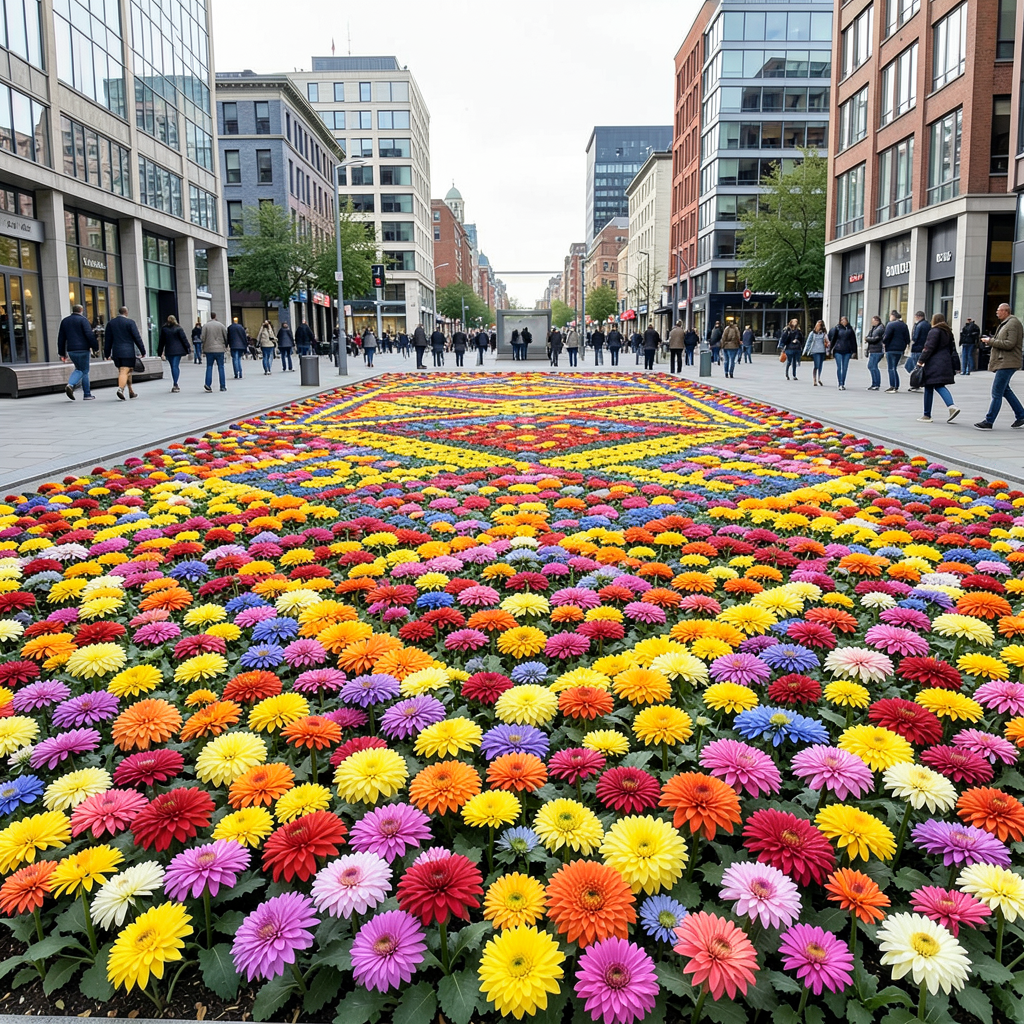

A team of volunteers has begun constructing a large-scale floral installation in central Bradford, marking the first appearance of the internationally recognised Flower Carpet concept in the United Kingdom.
The display has been installed in Centenary Square and will remain in place through September 27, featuring an intricate arrangement of more than 300,000 dahlia blooms.
Dedicated workers initiated the meticulous setup process early this morning, following the arrival of the flowers in a temperature-controlled vehicle from Belgium.
The expansive carpet spans approximately 29 metres in diameter, showcasing a design crafted by local artist Shiraaz Ali.
The artwork draws deep inspiration from the city’s historical textile manufacturing legacy and the cultural richness of its population.
The Bradford installation represents a historic first for the United Kingdom, realised through collaboration with Tapis de Fleurs de Bruxelles, the Belgian organisation renowned for its spectacular city centre floral displays.
Members of the public can observe the ongoing construction and appreciate the evolving artwork during the four-day free exhibition.
Evening visitors will experience an immersive atmosphere as the carpet comes alive with a custom-designed audio-visual illumination show.
Throughout the weekend, a range of interactive family activities themed around flowers and nature will be available for all ages.
Positioned against the imposing backdrop of Bradford City Hall, the installation forms part of the broader West Yorkshire Nature Season initiative and is anticipated to become a significant cultural highlight of 2026.
Once the exhibition concludes, all floral elements will be responsibly processed into local compost, underscoring the project’s environmental commitment.
The Flower Carpet concept, originating in Belgium during the 1970s, has evolved into a celebrated international artistic tradition.
This inaugural British presentation pays tribute to Bradford’s industrial heritage while simultaneously reflecting its contemporary identity, with the display expected to transform subtly in response to environmental conditions throughout its brief public viewing period.