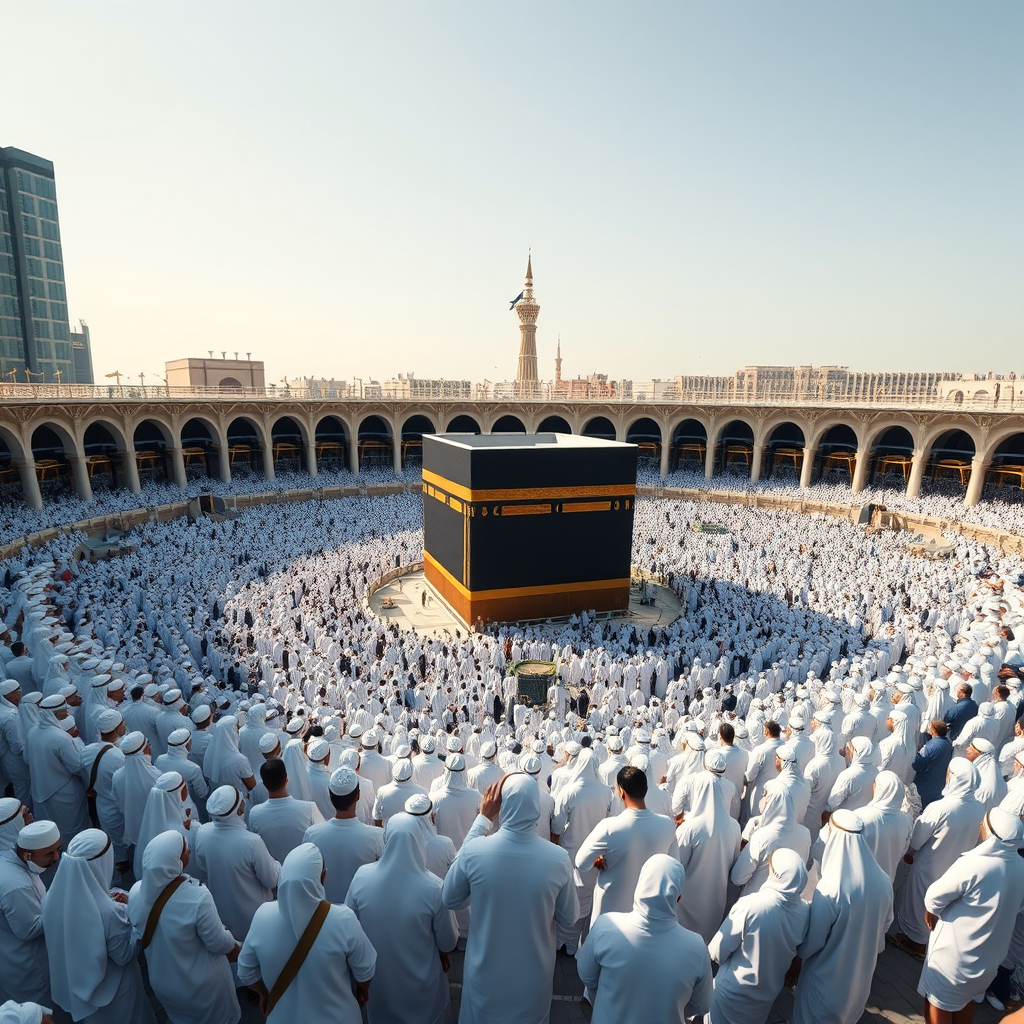

DOZENS of Muslims from Bradford are travelling for Hajj which takes place between May 24-28. For many, it is a once in a lifetime journey. A lifelong duty. A dream years in the making.
Dr Javed Bashir in Mecca
But behind the emotion and anticipation lies an uncomfortable truth. For the average person, Hajj is becoming out of reach.
Let us be blunt about the numbers. A standard two-week Hajj package now costs between £8,000 and £16,000 per person. That depends on how close you stay, how comfortable you want to be, and how near you are to key sites such as the Jamarat. Even at the lower end, it is beyond many ordinary families. Those on lower priced packages often find themselves in overcrowded accommodation, sharing with large groups, sometimes alongside pilgrims from countries such as Pakistan, India and Bangladesh, with very basic facilities and limited comfort.
For many, it is not just about affordability. It is about dignity. People are paying thousands of pounds, yet still facing conditions that feel far removed from what they were led to expect. This is not a luxury holiday. It is one of the five pillars of Islam. Yet it is now priced like an elite experience. For a couple, the cost can quickly climb to £16,000 to £32,000, before even factoring in spending money. For families, it becomes completely unrealistic. These are not ordinary expenses. These are life changing sums. In some cases, this is the kind of money that could clear a mortgage.
And all of this is happening during a cost-of-living crisis. People are struggling with rising mortgages, soaring energy bills, and increasing food prices. Wages are not keeping up. In that reality, expecting ordinary working people to find ten or fifteen thousand pounds each is simply not realistic.
So what happens? People delay Hajj year after year. They promise themselves they will go “one day.” They start saving, only to find the goalposts keep moving. Prices rise faster than they can save. What once felt achievable slowly slips away. A pillar of faith becomes a distant dream.
It also raises serious questions. Why is there such a huge difference between Umrah and Hajj? During Umrah, people can travel for a fraction of the price, often around one to two thousand pounds, staying in the same cities and often in the same hotels.
So why does that cost multiply several times over during Hajj? How can hotel prices surge so dramatically? Rooms that are reasonably priced for most of the year suddenly become vastly more expensive. The buildings are the same. The facilities are the same. Yet the price tag is on another level.
It is hard to ignore what this looks like. It looks like demand being exploited. Pilgrims have fixed dates and no flexibility. This is a once in a lifetime obligation tied to specific days. That should be protected, not turned into an opportunity for excessive profit.
Then there is the tiered system. The closer you are to key sites, the more you pay. The better the hotel, the higher the cost. Convenience comes at a premium. Slowly, a clear divide appears. Those who can afford more get comfort and ease. Those who cannot face greater difficulty.
But Hajj is meant to do the opposite. It is meant to strip away status. Everyone dressed the same. Everyone standing together. No wealth, no titles, no hierarchy. Yet before pilgrims even arrive, the system has already separated them based on what they can afford.
That is the deeper concern. Islam promotes equality, and Hajj is meant to be its most powerful symbol. But the way it is organised today is creating division. The inequality is not coming from the faith. It is coming from the system around it.
Yes, Hajj is only required for those who can afford it. But when prices rise so high that even average working people are priced out, it stops being about ability and starts becoming about exclusion. Add premium packages, luxury accommodation, and pay for convenience services, and the gap widens further.
There are also growing concerns about Hajj agents. Many pilgrims hand over their life savings in trust, hoping for a smooth journey. Some deliver. Too many do not. Complaints about poor communication, lack of transparency, and services not matching promises are becoming more common.
In the worst cases, some agents have taken people’s money and disappeared. Families have been left devastated, not only missing out on Hajj but losing years of hard-earned savings in the process. For many, that money represented a once in a lifetime opportunity to fulfil a pillar of their faith. To have that taken away is nothing short of a betrayal.
At a time when costs are already pushing Hajj out of reach, the lack of stronger safeguards only adds to the sense that pilgrims are being left exposed.
And then there is the added pressure to spend. Gifts for family, money for relatives, and cultural expectations pile even more cost onto an already expensive journey. But Hajj is not about shopping. It is about repentance, reflection, and reconnecting with Allah.
So we have to ask some hard questions. How did we get here? How has something so central to faith become so financially out of reach? Why are ordinary working people, who pray, fast, and give charity, finding it harder than ever to complete this pillar?
This is not about complaining. It is about fairness. There needs to be accountability, transparency, and a serious rethink of how Hajj is priced and delivered.
Because right now, too many people are watching others depart while they stay behind, not because they lack faith, but because they simply cannot afford it. That should concern all of us.
Hajj is meant to be a journey of equality, humility, and unity. It should not feel like a financial barrier.
Until something changes, the reality is stark. For the average person, Hajj is no longer just difficult. It is becoming impossible.
* Dr Javed Bashir is a Senior Lecturer in Policing at Leeds Trinity University and Founder of the Professional Muslim Institute