
Twenty-five years have passed since coordinated terrorist strikes transformed the United States on the morning of September 11, 2001.
Nineteen al-Qaeda operatives seized four commercial aircraft, using two to strike the World Trade Center’s twin towers in Manhattan, one to hit the Pentagon near Washington, and one to crash in rural Pennsylvania.
The attacks claimed 2,977 lives overall, including 67 British nationals.
Commemorative ceremonies took place on Friday to mark the quarter-century anniversary of the atrocity.
Residents of Bradford shared their recollections of that autumn morning as the anniversary prompted widespread reflection.
Diane Duguid departed Bradford almost sixty years prior to establish her life in New York alongside her American spouse George.
When passenger jets struck the World Trade Center complex on that September morning, she was present at her Long Island residence observing the unfolding crisis unfold in real time.
Her husband and both sons served as officers within the New York Police Department.
Circumstance meant that none of the male family members found themselves at the disaster location that day.
George senior had been scheduled to fly into New York originating from South Carolina, where he had been escorting a prisoner, yet he narrowly avoided being on that route.
The eldest son, also named George and employed as a detective, possessed a court appearance scheduled in Lower Manhattan near the towers, however the scheduled time was altered, a twist of fate that prevented him from arriving among the first responders.
His sibling Andrew had been stationed at his precinct in Queens County.
Following the structural failure of both towers, the younger George participated in the grim process of recovering and identifying remains.
He additionally contributed to the extensive debris removal operation conducted at the crash zone and at the Staten Island facility where recovered materials were subsequently transported for analysis.
In the subsequent year, Diane and her spouse gifted the local newspaper a commemorative plaque incorporating distinctive insignia created by the New York Police Department and Fire Department to honor fallen personnel from the 2001 emergency.
At the time of that donation, Diane expressed gratitude that her own relatives had survived while acknowledging that virtually every New Yorker possessed a connection to someone among the casualties.
Looking back across the intervening quarter-century, Diane noted that accounts published in commemoration continued to evoke profound sorrow.
Local coverage included testimonies from individuals whose birthdays coincided with the attacks themselves.
Two men originating from their community, one serving as a firefighter and another as a police officer, remained unaccounted for throughout the recovery period.
Their father maintained a daily presence at the impact site until his own passing.
The initial fatality among those providing spiritual support at the location was Father Judge, another native of Deer Park.
The ceremonies of mourning multiplied endlessly, with numerous families left without remains to inter.
Vicki Garwood, a resident of Denholme with prior military experience as a driver, journeyed across the Atlantic to participate in human remains recovery efforts.
She volunteered her services through the American Red Cross for a month, labouring during exhausting twelve-hour shifts while the ruins continued to smolder.
She described the atmosphere as resembling an immense burial ground, and recounted that workers were urged to engage emergency responders in conversation about subjects such as sport to provide momentary distraction from the surrounding devastation.
Vicki managed transport of wreckage materials from the location to designated storage facilities.
She disclosed that her most emotionally overwhelming moment occurred on her final day when she surveyed the crater in natural daylight, standing motionless while overcome with tears.
Anna Pratt, a Silsden native, was riding the subway beneath Manhattan when her train abruptly lost power and stopped.
Nineteen years of age at the time, she had been touring the city with her partner, intending to travel toward the financial district.
Both aircraft struck their targets while they were underground.
The train sat motionless within a station merely two blocks from the World Trade Center complex.
White smoke began seeping into the carriage, prompting instructions for passengers to relocate toward the rear.
Anna questioned how any escape could be achieved as doors remained sealed and anxiety spread among those aboard.
Eventually a firefighter arrived to force the doors open, revealing an environment thick with particulate matter.
Evacuees were directed to proceed northward on foot.
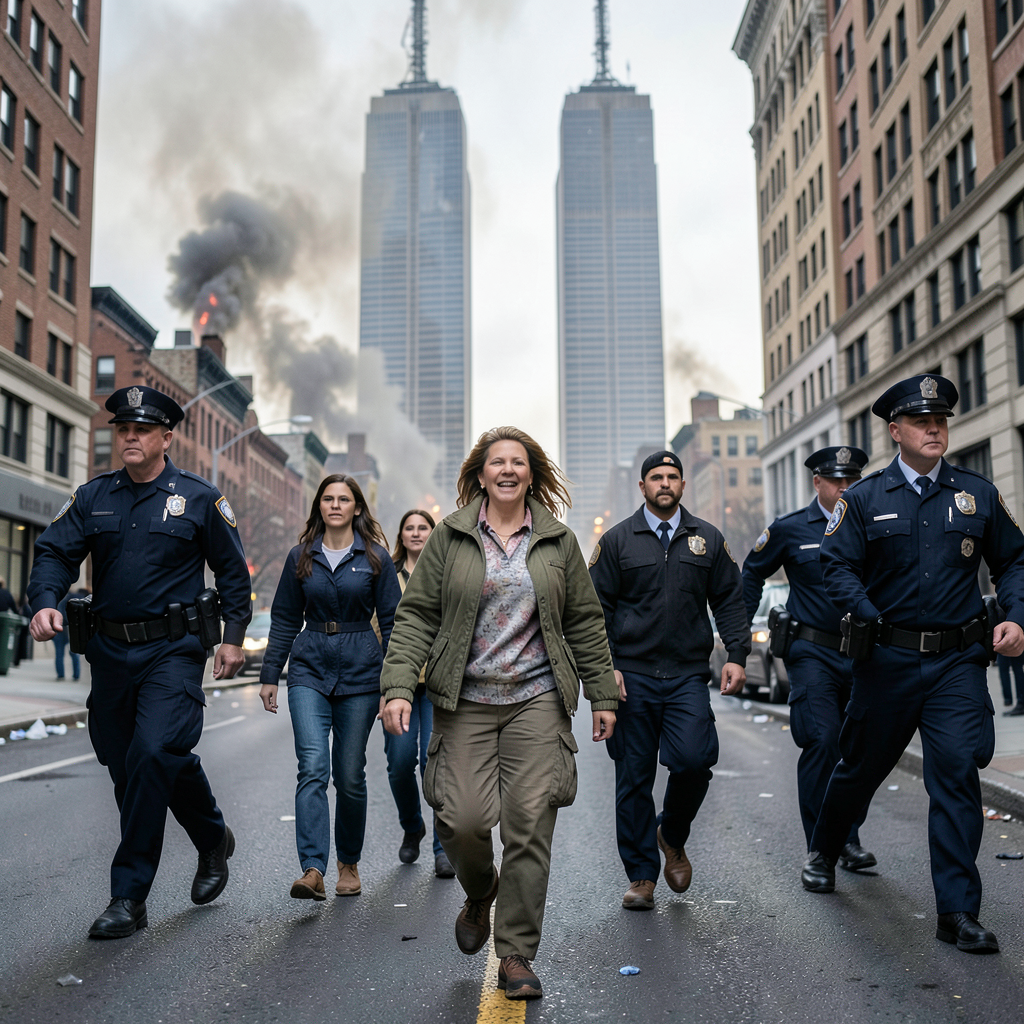
Police officers then directed the group to sprint along an adjacent street.
Flames consumed the tower visible from their position, and individuals trapped at the building’s windows could be observed attempting to flee.
The screams of injured people echoed as they lay across the platform floor.
Martin Heminway, who previously served as the newspaper’s news editor, happened to be celebrating his honeymoon in New York during the attacks.
He and his new wife were waiting in the queue at the Empire State Building to obtain admission tickets when aircraft hit the towers several blocks away.
Security personnel became visibly active, constantly receiving updates via their handheld radios.
Approximately forty minutes after the initial strike, a senior officer announced that a significant incident had occurred downtown and the observation deck would remain closed.
A mounting wave of dread pervaded the gathering as attendees surged toward escalators leading to the ground-floor lobby.
Outside on the pavement, streams of pedestrians fled southward along Fifth Avenue while an immense plume of debris-laden smoke shrouded the distant World Trade Center.
A passing patrol officer conveyed that an aircraft had impacted one of the towers.
The first wailing sirens from fire engines and ambulances commenced as convoys of emergency apparatus converged on the location.
Long lines materialised at every public telephone as those present attempted to contact colleagues and family members employed at the towers.
word rapidly circulated through the crowd that twin impacts had occurred, not merely one, with growing speculation that the collisions had been intentional.
Michael Quain, hailing from Keighley, was occupying a hotel room approximately five miles from the World Trade Center during the early hours.
He paused from his tasks to observe what had begun as a pristine, bright morning through his window on the sixth floor.
The Manhattan skyline stretched before him, featuring the Empire State Building to his right and the Twin Towers to his left.
He returned to his work and several hours later rose from his desk, glancing again toward the exterior.
Dense black plumes now darkened the sky.
He activated the television, finding the coverage reminiscent of disaster cinema yet undeniably authentic.
He telephoned his wife, and while they spoke, he observed through the window and remarked that one of the towers had begun to collapse, expressing certainty that countless fatalities would result.