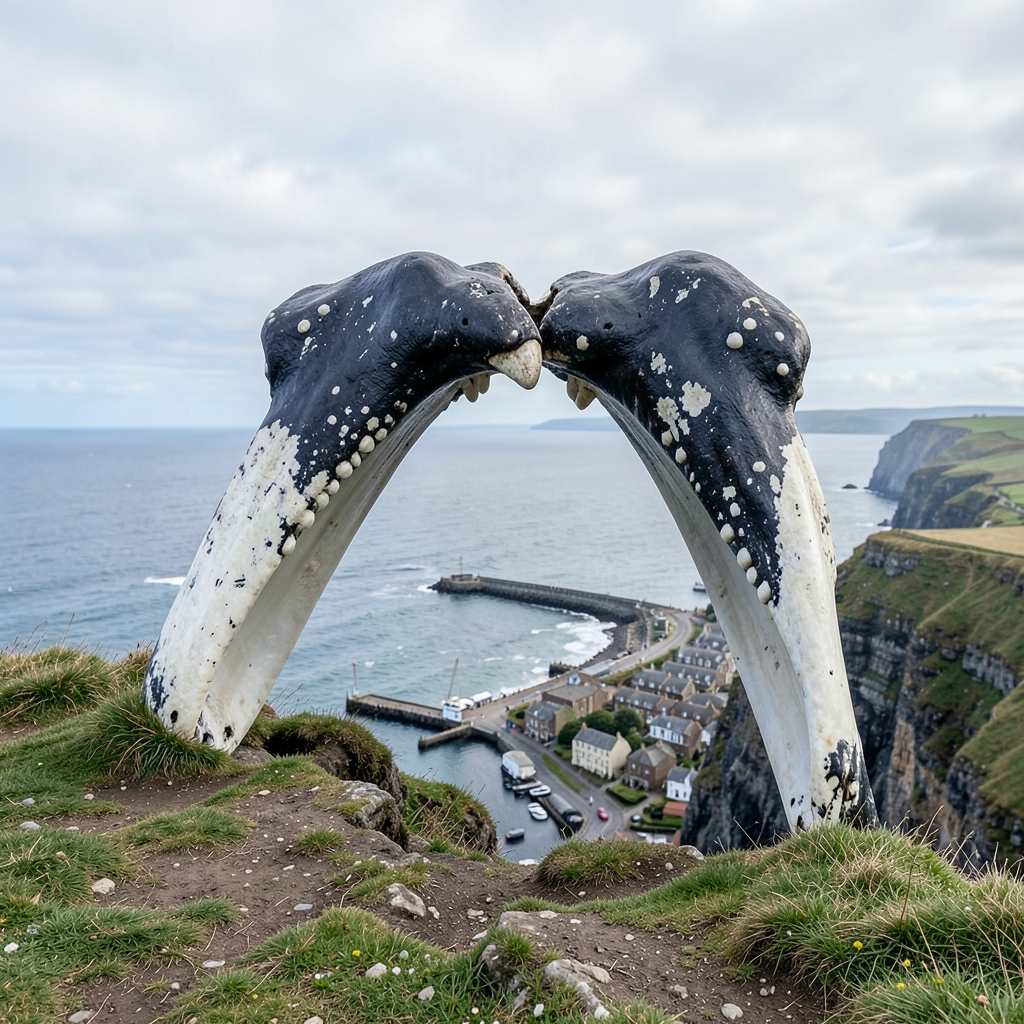

A historic Whitby landmark has been dismantled by local authorities, marking the end of an era for the North Yorkshire coastal town.
The Whale Bone Arch, which has dominated the West Cliff skyline for over 170 years, was taken down on Tuesday, September 1.
The removal forms part of an initiative to safeguard the town’s seafaring legacy for future generations.
A replacement crafted from ethical bronze is scheduled for installation next year at a cost of £70,000.
The new structure is expected to endure indefinitely and will gradually acquire a natural weathered appearance over time.
The original arch was most recently installed in 2002, having been donated by Whitby’s transatlantic twin town of Barrow, located in Alaska.
Despite this relatively recent replacement, exposure to coastal weather conditions caused significant deterioration to the structure.
Local elected officials have acknowledged the significance of the landmark to both residents and those visiting the area.
While acknowledging the melancholy of watching the original bones reach the end of their serviceable life, officials emphasised that the forthcoming bronze interpretation would maintain the monument’s role in commemorating Whitby’s past and continuing to serve as a prominent feature along the West Cliff promenade for many years ahead.
Bronze was selected as the replacement material owing to its durability, extended lifespan, and capacity to endure the harsh seaside environment prevalent along Whitby’s western shoreline.
The alloy will in time develop a characteristic patina while preserving the instantly recognisable silhouette that has become emblematic of the town’s waterfront.
North Yorkshire Council’s portfolio holder responsible for commercial development and harbour matters expressed that the arch represents one of Whitby’s most cherished monuments and plays a vital role in the town’s nautical identity.
Officials noted that the removal constituted a significant moment in recent local history, with visitors having gathered to view and capture images of the bones across more than twenty years.
The bronze reproductions were described as offering a morally sound solution to the utilisation of cetacean remains, enabling the preservation of this recognisable landmark and its association with Whitby’s maritime traditions in a manner consistent with contemporary preservation principles.
Council representatives indicated anticipation for the new installation to be positioned permanently, noting its anticipated durability over coming decades and continuing capacity to captivate both local inhabitants and visitors extending well into the future.
Community input demonstrated overwhelming support for a bronze interpretation as the most appropriate solution for maintaining the monument’s connection to the town’s seafaring traditions and its role as a symbol of international renown.
The structure frames the celebrated perspectives extending toward Whitby Abbey and draws considerable tourist numbers annually.
The fabrication process for the replacement, priced at £70,000, involves intricate procedures.
These include creating casts from the current bones and constructing a custom internal support system, according to council representatives.