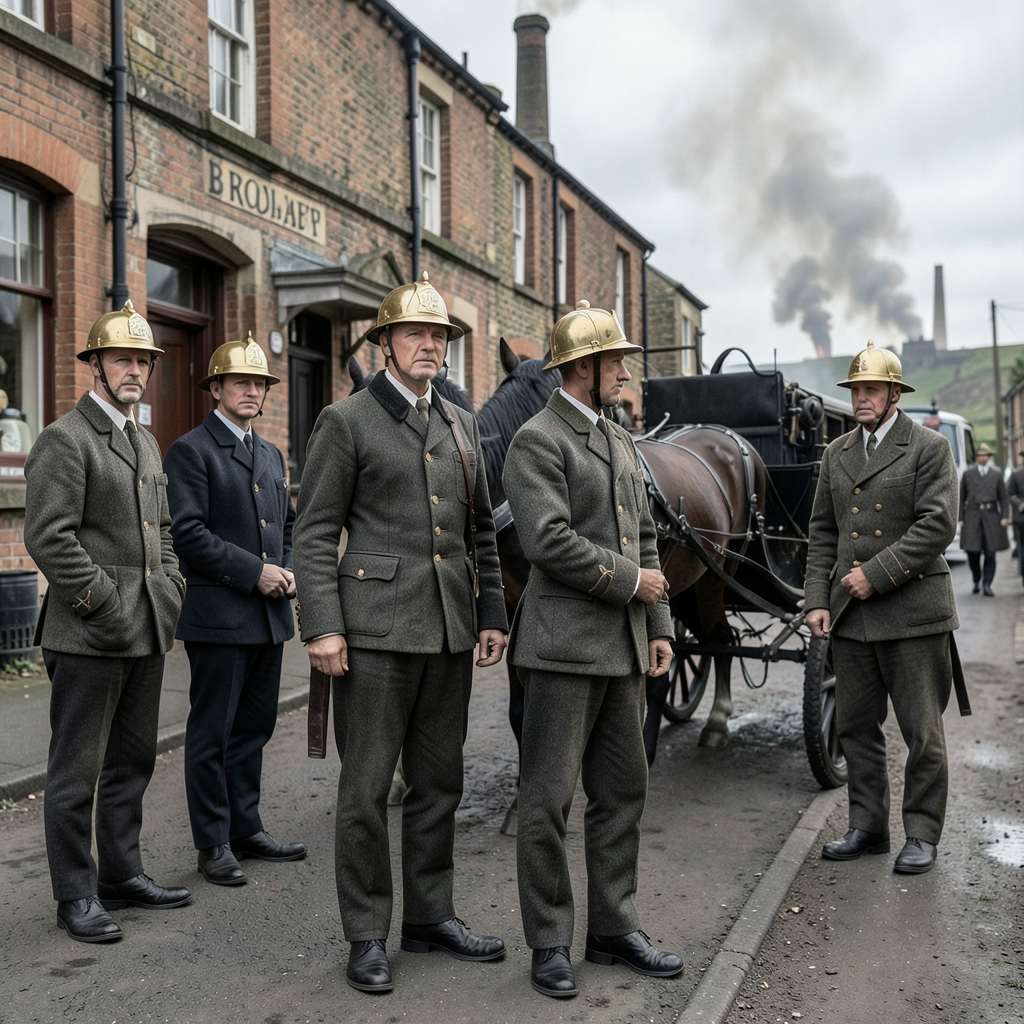

On the afternoon of Monday August 21st, 1916, personnel at Bradford’s Nelson Street Fire Station received a call at 2.33pm that would lead to one of the most harrowing responses in the city’s history.
The alarm was recorded at Central Station’s control room, prompting the deployment of firefighting units from both that location and the Odsal station.
Eighteen firefighters initially proceeded toward the Low Moor Munitions Factory, where an unimaginable scene awaited their arrival.
The day had begun pleasantly under clear skies, indistinguishable from countless others for the factory workforce.
However, the afternoon brought catastrophe.
Workers James Broughton and Sam Wade were occupied with transferring drums filled with picric acid, a substance employed as an explosive during the First World War, toward the packing area.
Without warning, one of the drums ignited, striking James and sending him to the ground.
Within moments, flames engulfed the interior storage facility and the remaining containers.
The conflagration intensified, spawning a series of detonations that rendered the situation unmanageable by the time the first two appliances reached the site.
One fire engine, designated Hayhurst, sustained damage from a blast and was hurled into the air.
A ruptured gasometer in the vicinity generated an enormous fireball that ascended high above the scene, with its intense heat detectable a considerable distance away.
Additional firefighting resources arrived from surrounding areas as the scale of destruction became apparent.
Emergency facilities were swiftly established, with New Works School serving as a temporary morgue and educational institutions in Wyke functioning as medical stations.
The blasts resulted in forty fatalities, encompassing on-site employees, a railway worker, and six members of the fire service.
A newly released publication titled Low Moor Explosion, A disaster waiting to happen documents these events.
The volume was assembled by Mary and Geoff Twentyman, Barbara Reardon, and Chris Smith, with publication handled by the Bradford Historical and Antiquarian Society.
The fifty-five-page work includes an enumeration of those who perished, comprising thirty-nine men whose occupations spanned positions such as yard worker, dye factory employee, forge striker, and metal fabrication tradesperson.
John Majerus, who served as the factory manager, succumbed to the disaster a day subsequent to the initial incident, having breathed in toxic fumes while assisting with firefighting efforts.
Six fire service personnel lost their lives.
Martha Briggs, aged fifty-nine, also perished, having suffered a stroke induced by the traumatic experience.
The phrase Body recovered from the debris recurs throughout the catalogue of victims.
Numerous others sustained serious wounds.
The publication acknowledges the courageous actions of numerous individuals on that day, several of whom subsequently received official recognition.
Beyond firefighters, commendations extended to police officers, volunteers from St John Ambulance and the Red Cross, and telephone exchange workers who remained at their posts during the crisis.
Chief Officer James Scott directed the operations of the Bradford fire service.
Accounts from those who witnessed the disaster provide additional perspective.
Ida Clarkson had departed Wesley Place Methodist Church accompanied by her newlywed husband Frank, whom she had married only moments prior, when the facility erupted in flames.
The horses awaiting the couple panicked and fled, destroying the wedding celebration.
Only the wedding cake survived, preserved by a quick-thinking individual who covered it in time.
Their residence lost its roof during the incident, yet the couple went on to share many decades together, commemorated in a photograph taken for their fiftieth wedding anniversary.
The extensively illustrated volume features numerous images, including depictions of the devastated site and portraits of both victims and survivors.
Its concluding photograph documents the funeral procession, with crowds numbering in the thousands lining Bradford’s main thoroughfares as the solemn cortège traversed the city centre.