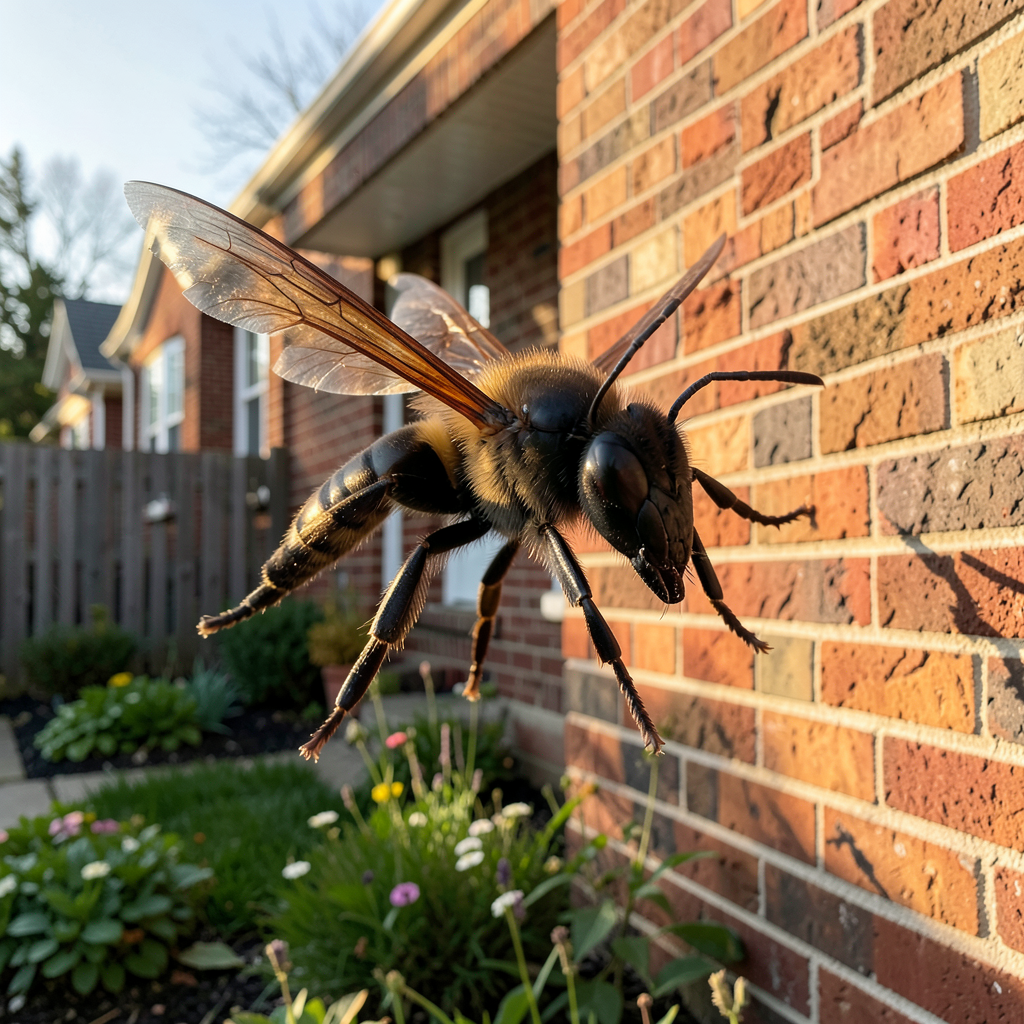

Residents are being alerted to heightened wasp activity as the month progresses, with experts noting a significant increase in aggressive behaviour from the insects.
Pest management professionals explain that September typically marks a period when wasp colonies reach their maximum population size just as their natural food sources become scarce.
This combination triggers a notable shift in the insects’ behaviour patterns.
John Whiteley-Wilkson, managing director at Acorn Environment Services, explained that September consistently ranks among the company’s busiest periods for wasp-related service requests.
At this stage, colonies have expanded to their full capacity and worker wasps are compelled to venture further from their nests in search of sustenance.
A common misconception exists regarding sudden wasp aggression.
Whiteley-Wilkson emphasised that this behaviour represents a natural phase in the insect’s developmental cycle rather than an unexplained change in temperament.
As their typical food supplies dwindle, the insects expand their foraging range, inevitably bringing them into more frequent proximity with humans.
During the earlier summer months, worker wasps perform a crucial function within the nest by providing nourishment to larvae.
In exchange, the workers receive a sugary secretion produced by the developing insects.
By September, the colony’s queen ceases egg production, causing larval numbers to decline substantially.
This disruption to the mutual exchange system leaves enormous numbers of workers seeking alternative sugar sources in the surrounding environment.
The search for alternative food leads to increased wasp presence near household waste receptacles, beverages, alfresco dining spaces, and decaying fruit.
This concentration of foraging activity naturally results in more encounters between wasps and the public.
Whiteley-Wilkson cautioned property owners against attempting independent nest removal, noting that amateur interventions frequently exacerbate the situation rather than resolving it.
Improper treatment methods often compel wasps to relocate within the structure, potentially introducing them to interior spaces such as lofts, wall cavities, or living areas.
Additionally, provoking an active colony can trigger defensive responses, significantly elevating the danger of mass stinging incidents.
Acorn Environment Services advises against several common errors when a nest is identified.
Property owners should refrain from sealing or obstructing nest entrances, applying domestic insect treatments to established colonies, using garden implements to interfere with nests, or attempting removal without specialist assistance.
Even routine outdoor activities can inadvertently provoke colonies.
Trimming hedges, operating strimmers, or using pressure washers generates vibrations that may disturb wasps nesting in adjacent areas.
Numerous service calls result from situations where residents remained unaware of a nest’s presence until the insects responded defensively to disturbance.
The necessity of immediate intervention depends on the nest’s specific location.
When situated in seldom-visited sections of a garden, nests may be safely left until natural colony decline occurs during later autumn months.
Conversely, nests positioned near entrances, patios, children’s play zones, or other high-traffic areas warrant professional evaluation rather than unsupervised handling.
Forecasters indicate that above-average temperatures are expected to persist throughout September, suggesting that elevated wasp activity levels will likely continue for an extended period.