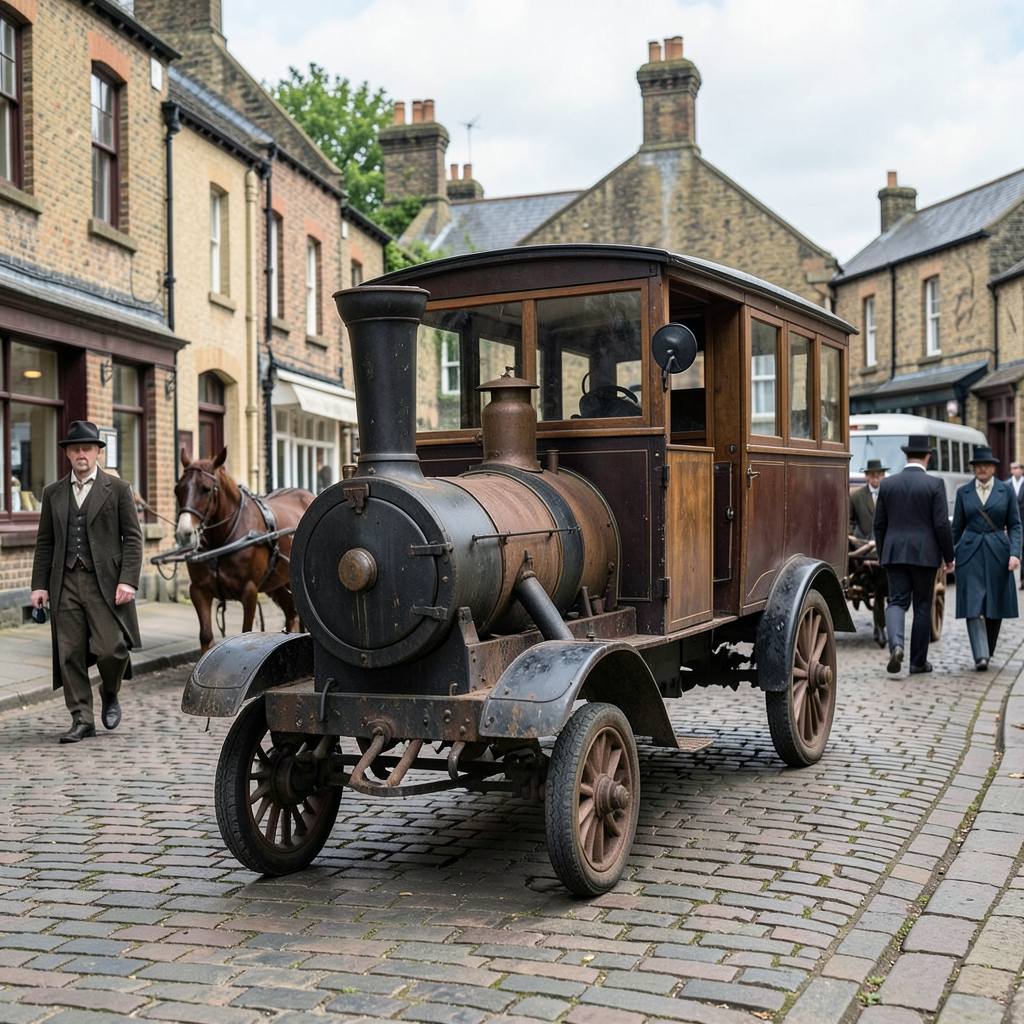

More than a century before modern buses dominated British roads, a West Yorkshire city was experimenting with revolutionary new technology that would transform public transport across the nation.
In September 1897, Bradford played a pioneering role in what is recognised as the inaugural motor bus service trial conducted anywhere in Britain.
The development represented a significant departure from the horse-drawn vehicles that dominated urban transport at the time.
Documentation from the Bradford Daily Telegraph, an ancestor of the T&A, reveals that the Yorkshire Motor Car Company secured official permission on September 15, 1897, to introduce motorised public transport within the city.
The approved vehicle operated using oil fuel and generated four horsepower, with capacity for five passengers alongside the driver.
Following the initial announcement, the same publication reported on September 17 that the enterprise had convened a shareholders’ meeting where additional information emerged.
The company disclosed that despite challenges sourcing appropriate vehicles, profitability had already been achieved during the initial quarter of business operations.
Simultaneously, confirmation arrived that Bradford City Council had sanctioned the company’s request to operate a motor bus for public hire throughout the city’s streets.
At that historical moment, mechanised public transportation remained largely experimental.
Most urban routes continued relying on horse-drawn alternatives, while electric tram networks were expanding rapidly through larger population centres, rendering Bradford’s venture particularly noteworthy.
A week subsequent to the licensing announcement, reports indicated that the experimental vehicle had concluded its inaugural day of commercial operation.
The motor bus transported up to six passengers along Thornton Road, connecting Bradford Town Hall with the Four Lane Ends area.
Three complete trips were undertaken without any mechanical difficulties arising.
The contemporary accounts paint a picture of a city willing to embrace emerging technology despite considerable uncertainty regarding its viability.
While available records do not clarify the precise duration of the service, indications suggest the trial persisted for only several days before concluding.
Nevertheless, Bradford secured its position in the evolution of transportation through this early adoption.
The initiative preceded widespread motor bus implementation across Britain by more than ten years.
Contemporary accounts from the same period document ongoing debate among engineers and transport professionals regarding optimal solutions for metropolitan travel requirements.
By July 1898, the Bradford Daily Telegraph documented advancement in the field, reporting on sophisticated motor omnibuses under development for deployment in London.
These vehicles harnessed steam propulsion systems generating between twelve and twenty horsepower, accommodating twenty-eight passengers and achieving velocities reaching ten miles per hour.
Parliamentarians received invitations to examine the new designs prior to their introduction.
Contemporary Bradford hosts an extensive network of bus services serving thousands of commuters daily.
The modest six-passenger vehicle navigating between the Town Hall and Four Lane Ends in September 1897 marked an early chapter in what would become the modern era of mechanised public transport.