
Bradford City’s managerial landscape has been defined by a single benchmark for the past decade.
Phil Parkinson’s legacy has served as an unyielding standard against which every subsequent appointment has been evaluated.
The former manager’s achievements proved remarkably difficult to replicate.
Over five campaigns, he guided a side that had been tasked merely with maintaining Football League status to consecutive Wembley finals and a top-five finish in League One.
Since Parkinson’s departure in 2016, no successor has commanded Valley Parade longer than Graham Alexander.
His tenure at the club spanned two years and 325 days, concluding with the side occupying the summit of League One.
This represented an extraordinary climb of 39 positions from the situation he inherited in late 2023.
Unlike his predecessor, Alexander never reached a Wembley showpiece, though two EFL Trophy semi-finals and a play-off campaign came close to providing that milestone.
However, one particular moment ensured his permanent place in the club’s collective memory.
The phrase 90+6 became immortalised in City folklore.
On May 3, 2025, supporters witnessed Alexander being carried aloft by jubilant followers in claret and amber following that dramatic late victory.
He became the only manager since Parkinson to achieve promotion, cementing his status as a deserving inheritor of that managerial mantle.
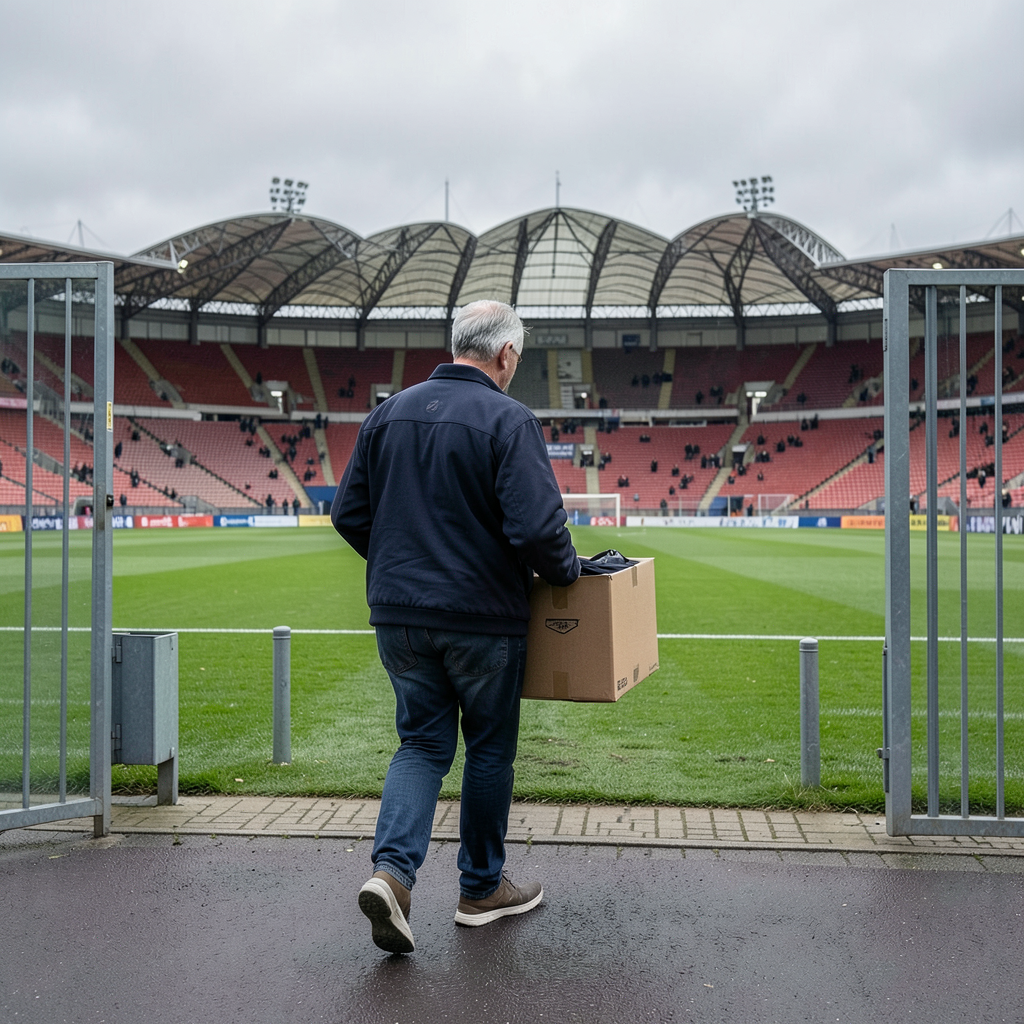
The announcement of Alexander’s departure for Preston North End has left supporters grappling with a sense of profound loss.
Despite circulating speculation, few anticipated such an abrupt conclusion.
At the time of his exit, Alexander ranked as the 15th longest-serving manager in the entire country, bringing rare stability to an institution long accustomed to upheaval.
His record demonstrated considerable accomplishment: 79 victories from 158 matches overall translated to a precise 50 percent success rate, representing the strongest return since Roy McFarland.
That previous manager had infamously departed mid-season to return to Derby County, his declared spiritual home, mirroring Alexander’s own path to Deepdale.
The transformation of Bradford’s home form constituted perhaps his most enduring achievement.
Following the disruption of the pandemic, City had failed to record double figures for home league victories across four consecutive seasons.
When Derek Adams’ tenure faltered in 2022, the side suffered more defeats than wins at Valley Parade, managing a mere six successful home outings.
Even when Mark Hughes guided the club to League Two play-offs the subsequent year, home results placed only tenth among 24 teams, with just nine wins to show.
Attending matches at the ground had become an exercise in diminishing expectations.
Alexander systematically altered this perception.
His opening fixture against Barrow saw the familiar pattern of conceding within 30 seconds, yet this initial setback merely preceded the beginning of a remarkable reversal.
Across his first complete season, the side accumulated 17 home victories and 55 points, including an unprecedented sequence of ten consecutive wins on home soil that established a new club record.
Upon entering the third tier, another 15 home wins propelled them to the 50-point mark once more.
Statistical analysis confirmed what supporters had come to recognise: when City scored the opening goal in home league encounters, defeat became virtually impossible.
From 39 such instances, 37 resulted in victory, with only Notts County and Barnsley managing to salvage draws.
A remarkable proportion of Alexander’s total victories, nearly one-third at 26, arrived by a single-goal margin.
The pattern became predictable: establish an advantage and the outcome was effectively settled.
Alexander constructed a side that resonated with the local community’s values.
His teams embodied industry, commitment and application without pretension.
Supporters embraced this identity wholeheartedly, forging a connection between pitch and terraces that transformed Valley Parade into something approaching an impregnable stronghold.
Recently, Alexander reflected publicly on his appreciation for witnessing the symbiotic relationship between team and crowd following each triumph.
That connection deepened considerably following the bitter disappointment of last season’s play-off elimination.
The manner in which devastated players were received at their lowest ebb, with an extraordinary ovation greeting their emergence after the Bolton defeat, illustrated precisely how far this relationship had developed.
The atmosphere surrounding those players spoke volumes about the transformation that had occurred under Alexander’s guidance.
His assessment of the situation captured the essence of what he had cultivated: a club where spectators arrived with genuine conviction that victory would follow, where the side represented the city’s identity as honest, hardworking individuals.
Supporters could observe those same characteristics mirrored in their football team, alongside genuine quality.
The departure of Alexander raises inevitable questions about the future trajectory.
Many anticipated that Bradford’s remarkable progress might falter following their first season back in the third tier.
The phenomenon of second-season difficulty remains a possibility given the relatively early stage of the current campaign, yet the initial months have established an exceptionally solid foundation for any incoming appointment.
Alexander instilled remarkable self-belief and tactical sophistication into his squad, extracting performances that surpassed reasonable expectations.
His players entered every contest convinced of their capability to compete with any opponent.
The efficiency with which he maximised his available resources exceeded anything witnessed since Parkinson’s most successful period.
Professional football’s trajectory can shift abruptly with a single telephone conversation.
When Ryan Sparks received the call from Preston North End’s chief executive Peter Risdale on Wednesday, the entire landscape altered unexpectedly.
The structural integrity Alexander established centred on mutual comprehension throughout the organisation.
Personnel could be adjusted, positions could be altered, yet everyone maintained crystal-clear understanding of their responsibilities and expectations.
This comprehensive clarity now faces potential disruption without the architect who methodically assembled this framework.
Continuity had defined the daily approach, with every training session presenting fresh opportunities to refine identical principles.
How these standards translate under alternative leadership, with different emphasis and perspective, remains uncertain.
Such considerations will likely occupy supporters’ thoughts considerably in the coming period.
The club’s equilibrium has certainly been disturbed, though the precise extent remains undetermined.
Football never remains static.
Assuming control of a team positioned so favourably within the league structure presents an undeniably compelling proposition.
However, whoever assumes this role confronts an exceptionally elevated threshold established by a leader whose sides consistently exceeded their apparent limitations.
Maintaining those standards will constitute perhaps the most challenging assignment in contemporary football management.