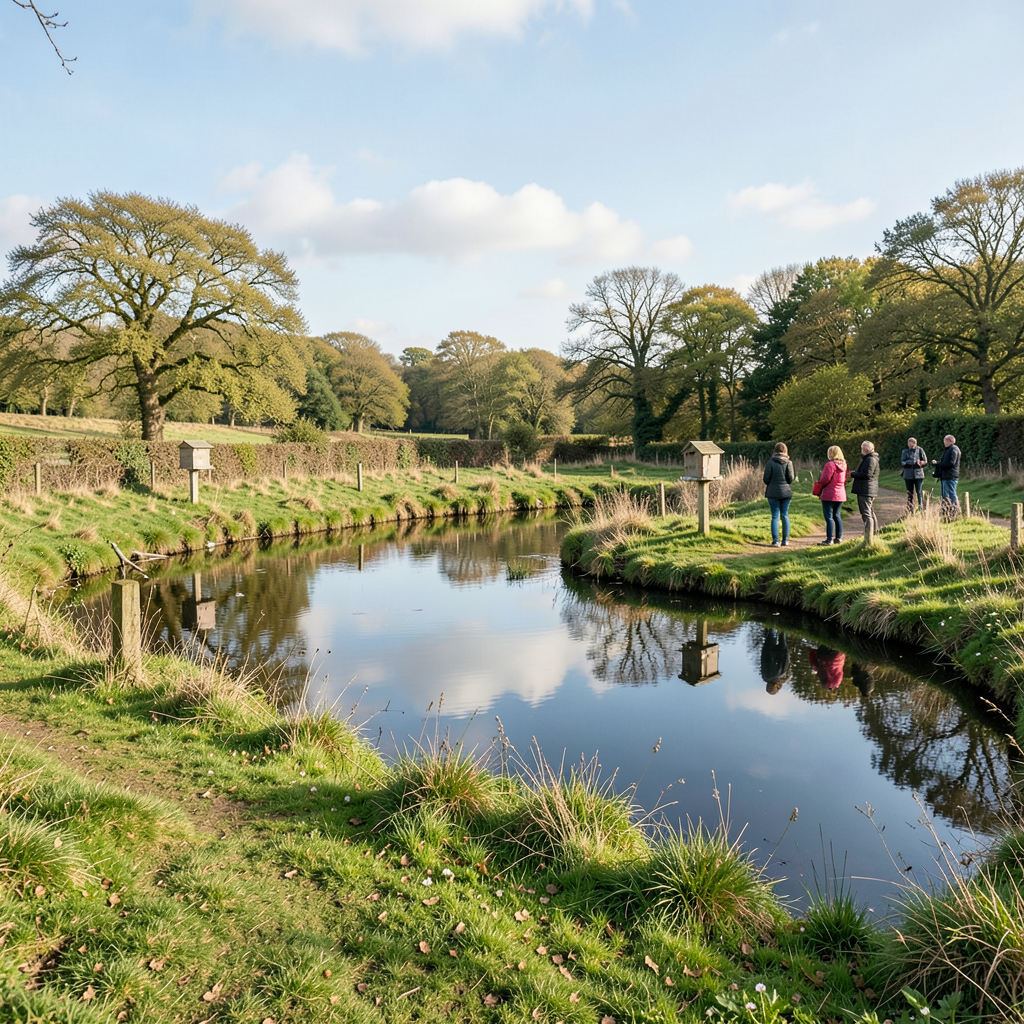

The conservation movement in Yorkshire reached a significant milestone as an environmental organisation celebrated eight decades of dedication to the region’s natural landscapes.
The group in question evolved from modest beginnings into a major force for wildlife preservation, expanding from a single nature reserve to an extensive network of protected areas spanning the county.
In the immediate post-war period, two confectionery industry figures who shared a passion for natural history established what began as the Yorkshire Naturalists’ Trust.
Sir Francis Terry and Arnold Rowntree initiated this venture specifically to safeguard Askham Bog near York, a site of considerable ecological significance.
Their vision drew inspiration from earlier pioneering conservation work by Charles Rothschild, who three decades earlier had recognised Britain’s urgent need for permanent wildlife sanctuaries and had identified Askham Bog as a priority location requiring protection.
From those pioneering days, the organisation pursued an ambitious mission rooted in community engagement and practical conservation work.
The scope of operations grew substantially over the ensuing years, transforming from modest premises within the Yorkshire Museum to a workforce approaching two hundred employees.
The portfolio of reserves expanded dramatically from the original Askham Bog site to more than one hundred and ten distinct nature reserves across Yorkshire.
This expansion was supported by an extensive volunteer network exceeding one thousand individuals and a membership base of forty-five thousand people.
The geographical reach of conservation activities encompassed diverse habitats throughout the region.
Work programmes extended from coastal meadows in the East Riding and the seabird colonies of Flamborough through to moorland restoration projects and the characteristic limestone landscapes of the Dales.
Environmental initiatives included the replanting of seagrass within the Humber Estuary, scientific monitoring of marine species to inform protective policies, disease management for woodlands affected by ash dieback, and adaptive measures for wetland ecosystems facing drought conditions.
Urban communities also benefited from support for greener neighbourhood schemes.
Several reserves occupied particularly notable positions within the organisation’s portfolio.
Askham Bog, acquired as the inaugural reserve, achieved recognition for its exceptionally rare plant and invertebrate communities.
Understanding of the site’s ecological requirements deepened over time, leading to management strategies focused on maximising moisture levels within the habitat.
Potteric Carr represented one of the more urban reserve locations, and its distinctive habitat faced periodic development pressures.
During the early 1970s, proposals to route the M18 motorway through the area prompted significant local opposition.
Parliamentary records documented the concerns of local residents regarding traffic congestion while simultaneously expressing alarm at the proposed route’s potential impact on the natural environment.
A coordinated campaign involving seven thousand five hundred objectors, supported by dedicated local activists and the Trust, successfully influenced the motorway’s final alignment, thereby preserving what became Potteric Carr.
The Spurn peninsula, now internationally renowned for its distinctive lighthouse and position as a migratory bird pathway, entered the Trust’s care in 1959 despite initial scepticism regarding the site’s long-term viability.
Member support validated this calculated commitment, and the designation of Spurn as a National Nature Reserve followed in 1996, subsequently drawing ornithology enthusiasts from throughout the nation.
Seabird conservation efforts centred on Yorkshire’s chalk cliff ecosystems, which hosted the largest mainland puffin colony in the United Kingdom.
The inaugural Puffin Festival emerged in 2019, serving both to celebrate these distinctive marine birds and to showcase the region’s internationally significant seabird populations.
The festival quickly established itself as an annual fixture attracting thousands of visitors to Flamborough and Bridlington.
Marine ecosystem restoration received substantial attention through collaborative initiatives.
The Wilder Humber project, delivered jointly with Lincolnshire Wildlife Trust, accomplished the most extensive deployment of native oysters within the intertidal zone of any British restoration initiative up to that point in 2025.
Historical oyster reef systems had previously provided comprehensive habitat complexity for estuarine wildlife alongside crucial water filtration functions.
High-profile advocacy for the organisation’s mission came from prominent naturalists who visited various reserves and supported conservation campaigns.
Most notably, opposition to a residential development proposal in 2019, which would have seen five hundred homes constructed on Moor Lane with potential consequences for Askham Bog’s sensitive ecological balance, gathered momentum through the backing of influential figures and more than seven thousand local supporters who recognised the development’s implications for the reserve.
Comprehensive assessment of regional biodiversity arrived with the inaugural State of Yorkshire’s Nature publication in June 2024.
This report provided detailed analysis of the county’s natural heritage, revealing that two-thirds of all British species occurred within Yorkshire while three thousand local species faced extinction risk.
A complementary recovery strategy titled Bringing Yorkshire’s Nature Back followed in 2025, constituting the first regional blueprint for ecological restoration.
This strategy outlined pathways for achieving national conservation targets including the thirty by thirty initiative, specifying required actions from local authorities, landowners, environmental organisations, and community groups.
Species-specific conservation programmes advanced on multiple fronts.
The year 2026 witnessed the first reintroduction of juvenile crayfish, bred from wild females within a specialized hatchery facility, into watercourses cleared of invasive crayfish species where survival prospects appeared more favourable.
Simultaneously, the organisation completed its one hundredth created pond specifically designed for great crested newts, representing part of a sustained multi-year collaboration with Natural England and regional landowners to expand available habitat for these protected amphibians.
Community participation initiatives broadened the conservation movement’s reach.
The programme, established in 2022, united individuals throughout Yorkshire committed to establishing more natural spaces within their localities.
Through this scheme, the Trust partnered with over sixty community organisations, offering guidance and practical assistance for local greening projects ranging from wildflower highway verges and neighbourhood gardens to educational visits and community celebrations held at nature reserves.
Peatland rehabilitation constituted another major area of activity.
The Yorkshire Peat Partnership, administered through the Trust, commemorated fifteen years of coordinated restoration efforts in 2025.
During this period, works extended across the Yorkshire Dales, the North York Moors National Park, and the Nidderdale National Landscape, with cumulative funding exceeding thirty-six million pounds secured.
Restoration efforts had already encompassed an area equivalent to the size of Bradford, with projected carbon emission savings of almost thirteen million tonnes by 2050 as these landscapes recover.
The expansion of Ingleborough National Nature Reserve in 2025 recognised decades of habitat revitalisation work undertaken by the Trust around the Ingleborough mountain area.
Conservation management incorporated mobile grazing herds, extensive restoration of dry stone walls extending across hundreds of metres, and educational programmes enabling large numbers of schoolchildren and urban residents to experience the wilder Dales landscape.
An upland plant nursery proved particularly significant, cultivating seeds of uncommon species including spiked speedwell, Yorkshire sandwort, and purple saxifrage for subsequent planting in suitable habitats.
The preservation of the lady’s-slipper orchid demonstrated the organisation’s long-term commitment to species recovery.
This plant had been reduced to a solitary specimen in a covert monitored location within the Yorkshire Dales.
Over a three-year period, the Trust collaborated with conservation partners to build upon previous decades of work centred on the remaining wild plant, successfully propagating new individuals and establishing many of these cultivated specimens within suitable Dales locations.
A remarkable development occurred in 2024 when an entirely new plant emerged at one reintroduction site, representing the first genuinely wild lady’s-slipper orchid recorded in approximately one hundred years.