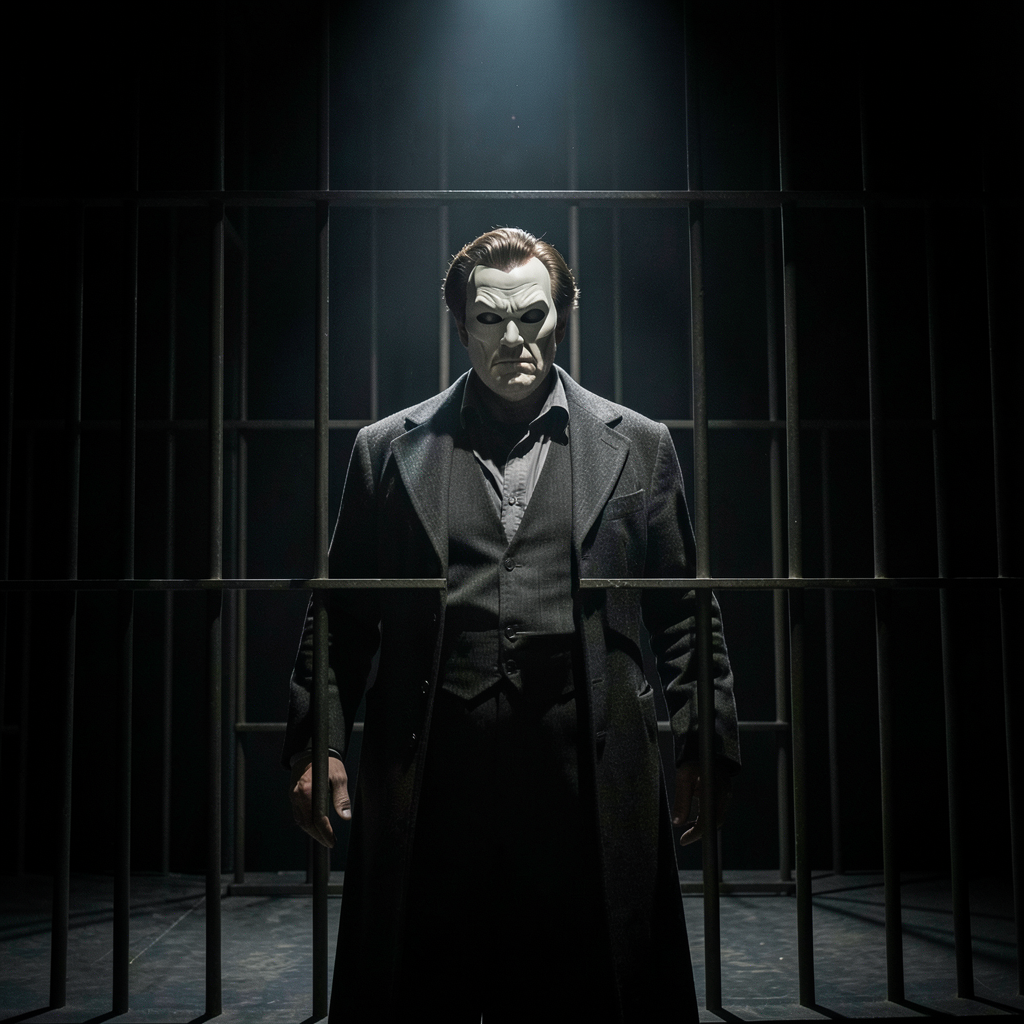

A missing girl and an active serial killer designated ‘Buffalo Bill’ drive the narrative of this psychological thriller.
FBI recruit Clarice Starling is dispatched to meet with imprisoned psychiatrist and convicted murderer Hannibal Lecter, whose cooperation could prove crucial to the investigation.
With the clock ticking on another potential victim’s life, the dynamic between trainee and criminal becomes increasingly complex.
Lecter’s own agenda emerges as the pair engage in a dangerous exchange of information and manipulation.
The adaptation explores whether Starling can maintain professional boundaries or whether she will be drawn into the twisted mind of the man known as ‘The Cannibal’.
The production arrives in Bradford following its inaugural run at Leicester’s Curve Theatre.
Director Nikolai Foster helms this stage version of Thomas Harris’s bestselling novel, with screenplay adaptation by American writer Gina Gionfriddo.
The principal cast features John Partridge portraying Hannibal Lecter, Mollie Gallagher as Clarice Starling, Oliver Farnworth taking the role of FBI agent Jack Crawford, and Sam Jackson portraying Buffalo Bill.
John Partridge brings experience as both performer and presenter, having gained prominence through his portrayal of Christian Clarke in the BBC soap opera EastEnders.
His theatrical background includes a prominent role in Cats, specifically portraying Rum Tum Tugger in the filmed production of Andrew Lloyd Webber’s musical.
Mollie Gallagher transitioned directly from drama school to her breakthrough role as Nina Lucas in Coronation Street, where she earned a National Television Award for her involvement in the programme’s hate crime storyline.
Oliver Farnworth’s stage experience encompasses productions including 42nd Street and Fatal Attraction, while his television appearances span period dramas such as Mr Selfridge and The Royal, alongside more recent work in Emmerdale where he portrayed the character John Sugden.
Sam Jackson’s theatre credits feature productions of Beautiful Thing and Kes, with additional television work including appearances in Father Brown, The Syndicate and Skins.
The cast reflected on their connection to the source material.
One performer noted having been an established audience member since the 1991 film’s release, describing initial enthusiasm about the theatrical adaptation.
Another cast member discussed the enduring appeal of the original story, character development approaches, and the challenges of inhabiting roles that have become deeply embedded in popular culture.
Regarding character preparation, John Partridge explored his approach to portraying Lecter, selecting three distinct inspirations in Cary Grant, Elizabeth Taylor and John Malkovich.
The performer emphasised the character’s blend of intelligence, mockery, acidity, seriousness and malevolence, noting an attempt to approach the role independently from previous interpretations.
Mollie Gallagher discussed physical transformation, explaining adjustments to posture and vocal delivery to convey strength and grounding befitting the character, expressing an ongoing practice of considering how her character would respond in various scenarios.
Oliver Farnworth addressed the depiction of Jack Crawford as head of the FBI behavioural science unit, highlighting the historical context of psychological profiling and technological limitations of the era depicted, including references to fax machines representing cutting-edge equipment of the time.
Sam Jackson spoke about developing the motivation for the character Jame Gumb, noting that rather than adhering strictly to the film’s depiction, an alternative backstory involving a mother-son relationship was created to justify the character’s psychology.
Regarding the theatrical medium, the performers discussed why the material translates effectively to live performance.
The relationship between Lecter and Clarice was described as inherently theatrical, with comparisons to dance and competitive exchange.
The cast noted that the stage version amplifies dramatic tension between scenes of frantic investigation and moments of calculated stillness.
Sound design and musical elements were identified as contributing to atmosphere, with the pivotal scene of Clarice approaching Lecter’s cell highlighted as particularly effective theatrical staging.
The production’s thematic content remains relevant, according to the cast.
Set during the 1980s, the story reflects societal attitudes that, while potentially improved, continue to resonate with contemporary audiences.
Discussions touched upon changing perspectives regarding gender, sexuality and professional equality.
The character of Clarice Starling was identified as embodying the experience of an underdog navigating a male-dominated professional environment.
The fascination with psychologically disturbed individuals was examined, with cast members noting audience interest in understanding the minds of those who commit crimes, suggesting the theatrical exploration of criminal psychology offers a distinctive and compelling experience.
The Silence of the Lambs runs at the Alhambra Theatre from October 12 to October 17.