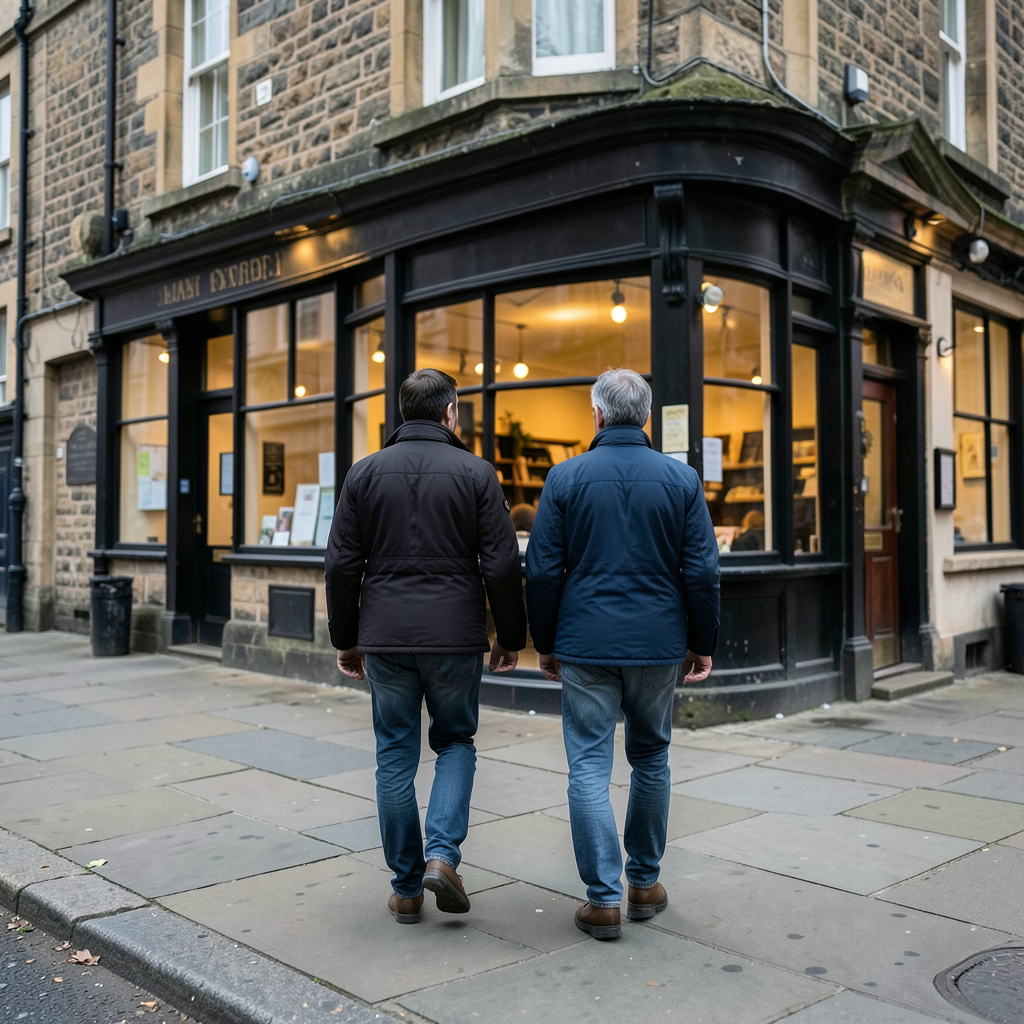

A new publication examines the route between railway stations and hostelries across northern England, celebrating the journey as much as the destination itself.
Bradford-born documentary photographer Ian Beesley and poet, playwright and broadcaster Ian McMillan have collaborated on a second volume exploring how the simple act of walking to a public house can become an art form.
The pair previously released a work examining pub heritage, which sold out rapidly and prompted this follow-up project.
The latest book combines hand-drawn cartography and photographic imagery with new verse composed by McMillan, who serves as the unofficial laureate of Yorkshire.
The publication acts as a practical handbook for short routes through urban environments, incorporating quizzes and detailed directions.
The featured establishments span multiple northern towns and cities.
In Bradford alone, the itinerary includes venues on Bolton Road and Bowling Old Lane, alongside options in Huddersfield, Stalybridge, Leeds and Manchester.
A Victorian-era public house in Leeds, granted listed building status, receives particular attention alongside lesser-known backstreet operations.
McMillan notes that the initial volume concentrated on the social advantages of pub culture generally, whereas this contribution emphasises the specific benefits of the physical journey itself.
The work deliberately avoids idealized countryside imagery in favour of post-industrial surroundings, embracing canal pathways, underpasses and urban architecture as equally worthy subjects.
The book examines how certain urban districts underwent significant decline during the 1980s before experiencing regeneration through residential development, with surviving traditional establishments subsequently attracting new patrons.
This pattern reportedly manifested in both Manchester and Leeds.
A recurring theme involves establishments connected to former local employers.
Beesley observes that many Bradford hostelries originally served workers from nearby factories and mills.
When such businesses closed, their traditional clientele vanished, contributing substantially to the closure of numerous community pubs.
In recognition of these struggling venues, Beesley produced a textile banner celebrating Bradford’s lesser-known public houses.
The design incorporates orange symbolising optimism and white representing fresh starts, with hop vines connecting imagery throughout.
The Fighting Cock, a well-regarded backstreet establishment, occupies the central position.
The banner and accompanying photographic displays will feature in an exhibition at Gallery 2, with the publication available from the mill’s bookshop.
The collaborators maintain their own regular tradition, meeting monthly at a Huddersfield establishment.
One travels by rail from Barnsley while the other journeys from the Saddleworth area, with their shared appreciation for railway journeys influencing the book’s emphasis on routes originating from train stations.
Several documented walks connect railway termini with nearby pubs, including journeys between Forster Square and a Bradford establishment, and from Apperley Bridge to a Greengates brewery operation.
That particular brewery produced a complementary alcoholic beverage specifically to accompany the publication.
Local history intersected unexpectedly with popular culture during research.
The brewery occupies premises formerly run by a textile mill where Beesley had family connections.
His aunt worked at the mill during an era when a future film star also modelled knitwear there, long before achieving international fame as a secret agent.
Academic perspective accompanies the practical guidance.
A researcher from a longitudinal health study contributed an introductory essay emphasising how side-by-side conversation during walking creates natural opportunities for communication that face-to-face interaction sometimes inhibits.
The rhythmic nature of ambulation apparently encourages reflection and openness.
The book also captures spontaneous encounters occurring along urban routes.
Such observations remind readers that city walking offers its own form of natural spectacle, distinct from but equally valid as pastoral landscapes typically associated with rambling literature.