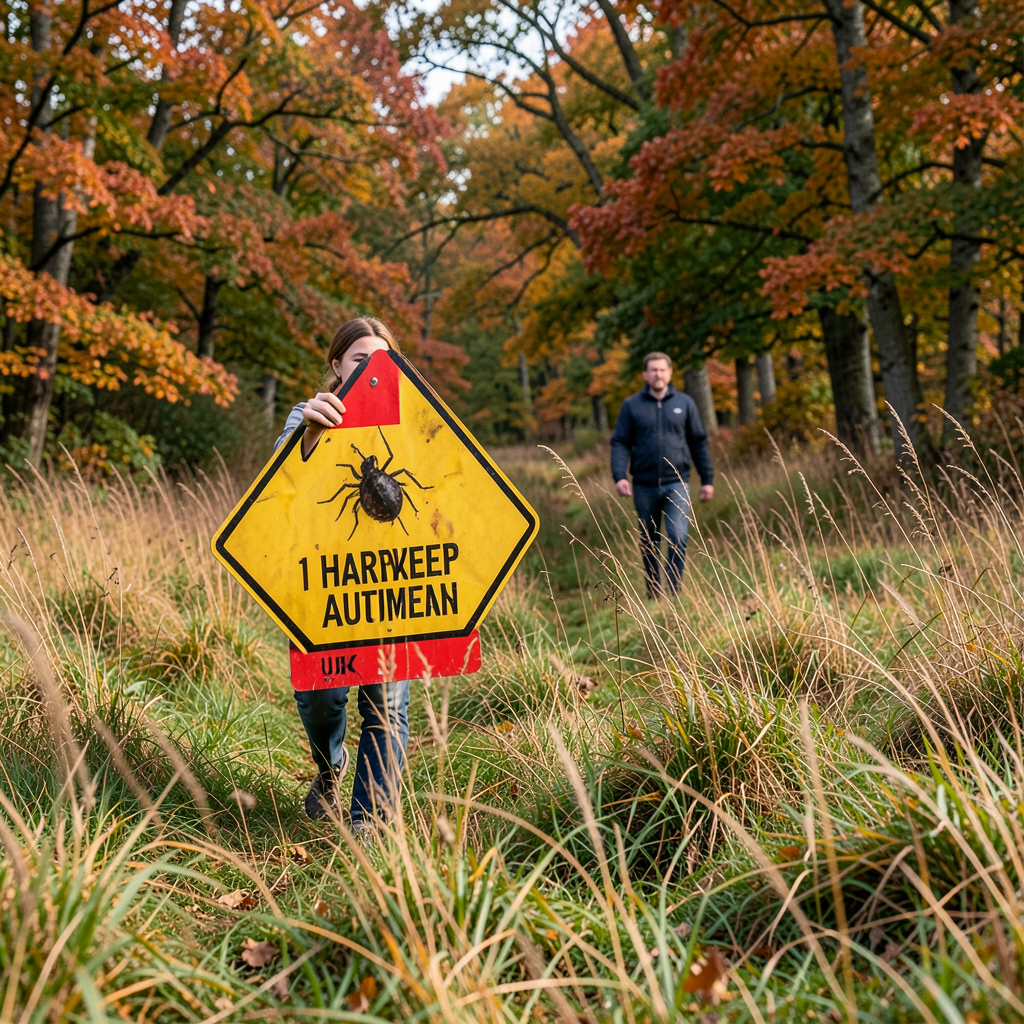

British residents are being alerted to the hazards posed by a tiny creature capable of producing severely irritating skin lesions and fluid-filled blisters.
These parasites inhabit grassy areas and wooded regions throughout the United Kingdom, attaching themselves to both people and domestic animals such as canines.
The organisms are additionally referred to as chiggers or berry bugs, with September and October representing some of the busiest periods for their activity.
Hanna Yusuf, a prescribing pharmacist working for Chemist4U, has highlighted the risks associated with these creatures.
According to her, the parasites flourish during late summer and autumn months owing to their larval stage being at its most active period.
The minute larvae occupy tall vegetation, woodland boundaries and overgrown plant growth, positioning themselves to cling to any humans or animals that pass by.
September and October constitute the primary months for bites, rendering outdoor pursuits especially precarious during this season.
Identifying a harvest mite encounter can prove challenging since the creatures are exceptionally minute and hard to detect.
Individuals can anticipate the development of intensely pruritic red papules or groupings of elevated lesions across the skin surface.
On certain occasions, blistering or skin inflammation may manifest, particularly where garments fit snugly such as around the ankles, waistband region and rear of the knees.
Regarding appropriate responses to such bites, scratching the affected region should be avoided as this elevates the probability of secondary infection developing.
Washing the location thoroughly using soap and water, applying a cool compress, and administering antihistamine preparations or hydrocortisone ointment can assist in alleviating both itching and inflammation.
Should symptoms deteriorate, the region becomes tender, heated or puffy, or indicators of infection emerge, obtaining guidance from a pharmacist or medical practitioner becomes essential.
For minimising the likelihood of being bitten by these diminutive parasites, donning full-length trousers and enclosed footwear proves advisable when traversing overgrown grassy terrain.
Bathing and changing attire following exposure to elevated-risk outdoor locations is similarly recommended by the pharmacist.
The PDSA has noted that harvest mites are small and display an orange colouring, presenting concerns for canine companions during late summer and autumn.
The organisation has further stated that infestations are most frequently observed affecting the paws, limbs and occasionally the ear region.
The creatures occupy soil and demonstrate peak activity spanning from July through November.
When a canine contracts a harvest mite infestation, the animal typically experiences persistent itching and general discomfort.
Certain dogs exhibit heightened sensitivity to harvest mite secretions, resulting in severely pruritic, erythematous and inflamed skin at bite locations.
Infestations typically concentrate between digit gaps, on paws, limbs, armpits, genital regions, abdomen and can sporadically involve the ears.
Animal guardians ought to consult their veterinary practitioner should they suspect their canine or feline companion has contracted harvest mites, as professional intervention may be necessary.