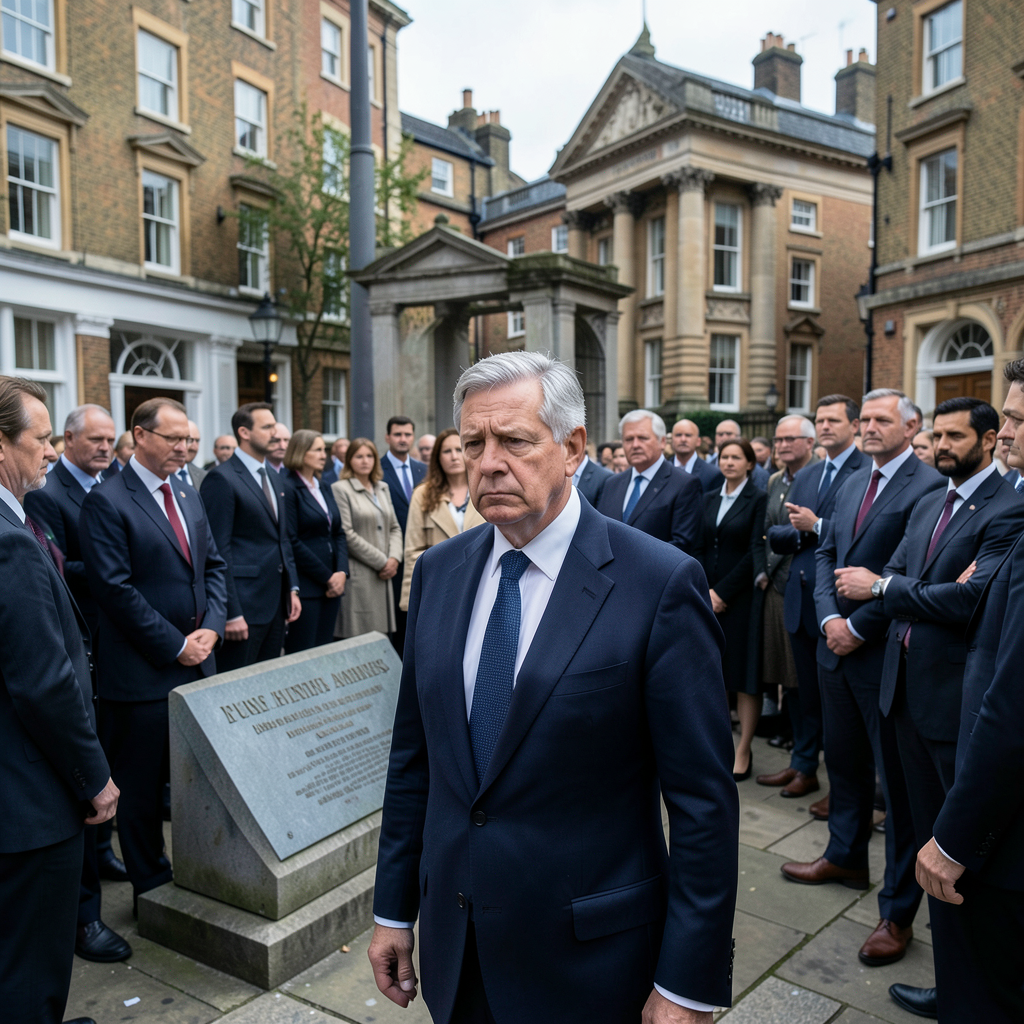

Andy Burnham has cautioned that terrorism continues to threaten democratic societies as commemorations took place marking the quarter-century since the September 11 attacks.
The Mayor of Greater Manchester expressed solidarity with the United States during ceremonies conducted across both nations to observe the solemn occasion.
The Prime Minister emphasized the enduring partnership between Britain and America, stating that both countries honour those who perished while reaffirming their commitment to shared democratic principles.
The leader recalled how messages of encouragement arrived from across the Atlantic following terrorist incidents in Manchester during his tenure as mayor of the metropolitan region, including correspondence from young people whose relatives were among the victims of the 2001 attacks.
Sir Tony Blair, who held the premiership at the time of the atrocities and managed their consequences, observed that the commemoration also provided an opportunity to acknowledge the fundamental connection linking the two allied nations.
Warren Stephens, the American ambassador to the United Kingdom, stated that Britain had demonstrated solidarity during one of America’s most challenging periods, noting that despite occasional differences of opinion, the transatlantic partnership had maintained security for generations.
These remarks come amid reports of tensions with the administration of President Donald Trump, particularly regarding disagreements over the Iran conflict, which have strained relationships with longstanding allies.
Twenty-five years prior, on a clear morning, 2,977 individuals, including 67 British nationals, lost their lives when aircraft seized by al Qaida militants struck the twin towers of the World Trade Center in New York and the Pentagon headquarters near Washington DC.
A fourth aircraft, United Airlines Flight 93, went down in a Pennsylvania field after crew members and passengers confronted the hijackers with the phrase attributed to one of the passengers.
The assault is considered the most devastating terrorist operation in recorded history, claiming victims representing more than 90 nationalities.
In retaliation, the United States became the sole nation to invoke NATO’s mutual defence provision, obligating member states to rally in support of an attacked ally.
The commitment has since been called into question by the current American president.
The response resulted in substantial deployment of British military personnel to campaigns in Afghanistan and Iraq, resulting in hundreds of fatalities and thousands of injuries among UK forces, with consequences that continue to reverberate globally.
Burnham stated that nearly 3,000 individuals perished in the attacks, including 67 British citizens.
He noted that while the passage of time might suggest diminishing grief, those who lost loved ones continue to feel the pain profoundly.
He emphasised that the commemorative occasion required remembrance that animosity and dread did not deliver the final verdict following the atrocities.
The terrorists intended to undermine and fracture America along with all nations embracing comparable values, yet the response demonstrated unequivocally that those attempting to eradicate their way of life would ultimately fail.
Burnham observed that identical determination was demonstrated in Greater Manchester.
During his term as mayor, the city experienced two devastating terrorist attacks.
Messages conveying solidarity arrived from Americans who possessed firsthand understanding of Manchester’s suffering.
Some children who lost parents during the September 11 attacks corresponded with families affected by the Manchester bombings, expressing that the bonds of shared humanity transcended geographical boundaries.
While these devastating events would never be forgotten, the communities refused to allow them to define their identity.
Though terrorism persists in challenging democratic institutions, Britain and America would continue to commemorate the deceased while defending their common values.
The notion of mutual human connection would ultimately prove victorious.
Sir Tony Blair reflected that September 11, 2001, would remain perpetually significant both as a leader who navigated its consequences and as an ordinary citizen.
The attacks constituted the most severe terrorist operation ever carried out, represented the greatest loss of life from an assault on American territory in the nation’s history, and resulted in the highest number of British casualties from any single act of terrorism.
That day fundamentally altered the global landscape, and its effects continue to shape the world a quarter-century later.
He stated that those who died, approximately 3,000 in total, and their families would be honoured.
The bravery displayed by emergency personnel, many of whom sacrificed their own lives during the rescue operations, would be recalled alongside the remarkable resilience demonstrated by residents of New York and other affected cities.
Although no comparable assault has since occurred in America, the campaign against terrorism in all its manifestations remains ongoing.
All people should renew their commitment to confronting and defeating those responsible for such violence while pursuing harmony among individuals of every faith, culture, and nation.
As Britain marks this day, the country also celebrates the unwavering and indispensable relationship between the United Kingdom and the United States of America.