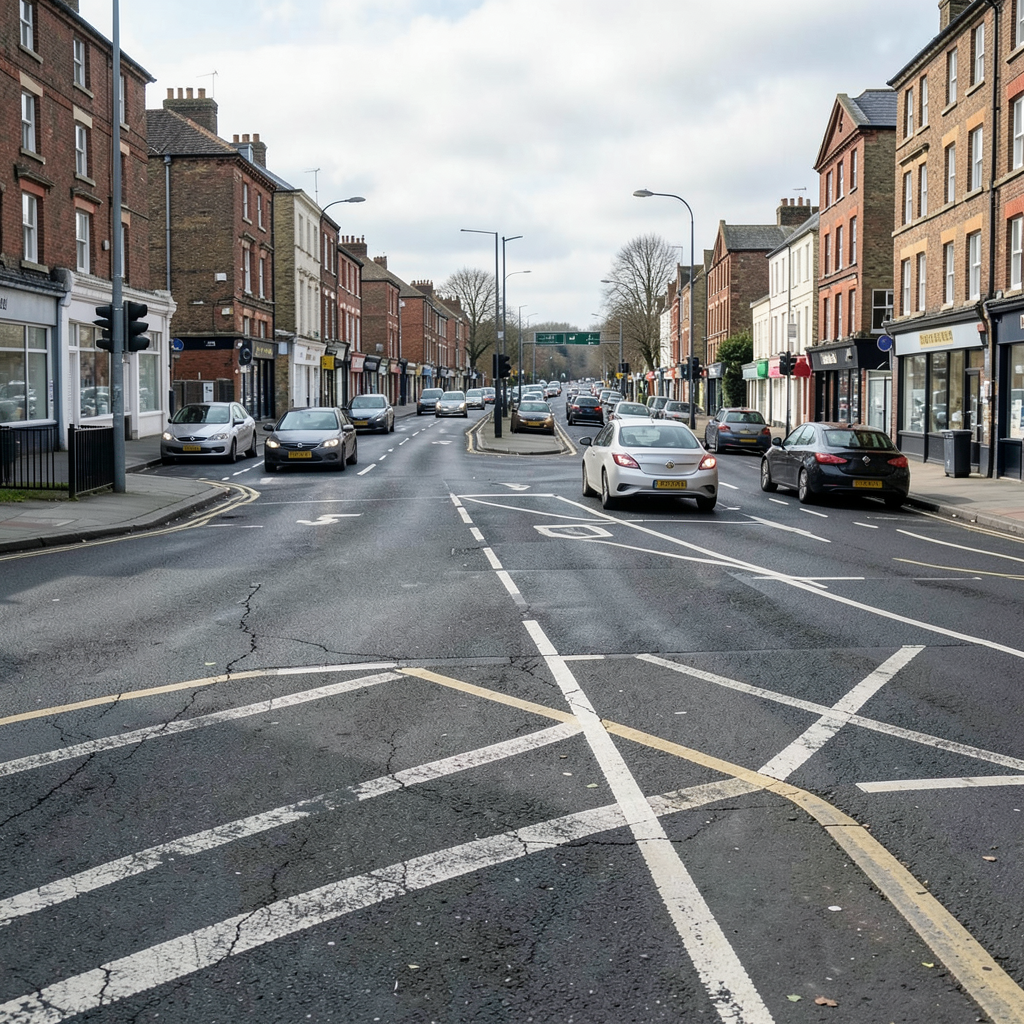

An infrastructure funding package of £6.6 million has been given the green light for a major road improvement project in Bradford.
The West Yorkshire Combined Authority Investment Committee approved the additional allocation for the junction enhancement scheme located where Toller Lane, Whetley Hill, Whetley Lane and Carlisle Road converge.
The decision brings the total committed funds for the scheme to £8.56 million.
Following the vote, construction is scheduled to commence next month with completion targeted for November 2027.
The project was initially put forward seven years ago, though financial constraints resulted in significant postponement.
Since first being proposed, the projected expenditure has increased by 20 per cent.
During the committee proceedings, Councillor Ian Eglin representing Baildon and a member of the Reform UK executive on the council, expressed support for the funding.
He noted that the area had been neglected, describing it as requiring improvement.
The elected member indicated he regularly travelled through the roads in question and emphasised that congestion relief would be welcome.
The proposed works encompass multiple improvements designed to enhance traffic movement and pedestrian safety.
The scheme includes installation of two bus priority traffic signals, dedicated left-turn lanes onto Toller Lane from both Whetley Lane and Carlisle Road approaches, and eight new signalised pedestrian crossing points alongside one additional Toucan crossing.
Cross Road will be permanently closed to traffic, a measure intended to streamline the junction configuration and reduce potential conflicts while enabling more efficient signal sequencing.
Pavements along Church Street and Whetley Lane will be widened, with 50 metres of new cycle infrastructure created linking Cross Road and Church Street.
One bus stop shelter will be upgraded.
Environmental improvements involve planting 54 trees and establishing 3,345 square metres of soft landscaping.
Additionally, 8,509 square metres of carriageway will receive resurfacing treatment.
Councillor Ralph Cohn from the Conservative group representing Airedale commented that online feedback suggested considerable public scepticism about the scheme.
He noted that critics had raised concerns about expenditure levels and questioned whether the junction had presented problems until recently.
However, he pointed to data within the committee report indicating that 31 road traffic casualties had occurred within the vicinity over the preceding five years, suggesting the perception of a trouble-free junction was likely inaccurate.
Sarah Courtney, a Labour councillor for Hebden Bridge, offered endorsement for the project’s broader health objectives.
She highlighted that increased physical activity represented one of the most effective interventions for wellbeing and suggested the scheme would contribute to casualty reduction and air quality improvements.
Martin Hey from the Green Party observed that traffic conditions in this section ranked among the most problematic nationally, extending from the Bradford side into Calderdale.
He stated his enthusiasm for progressing the scheme.
The newly appointed committee member acknowledged that the expenditure figures appeared substantial but noted that economic analysis presented to members indicated strong value, with each pound invested projected to generate £3.37 in wider economic returns.