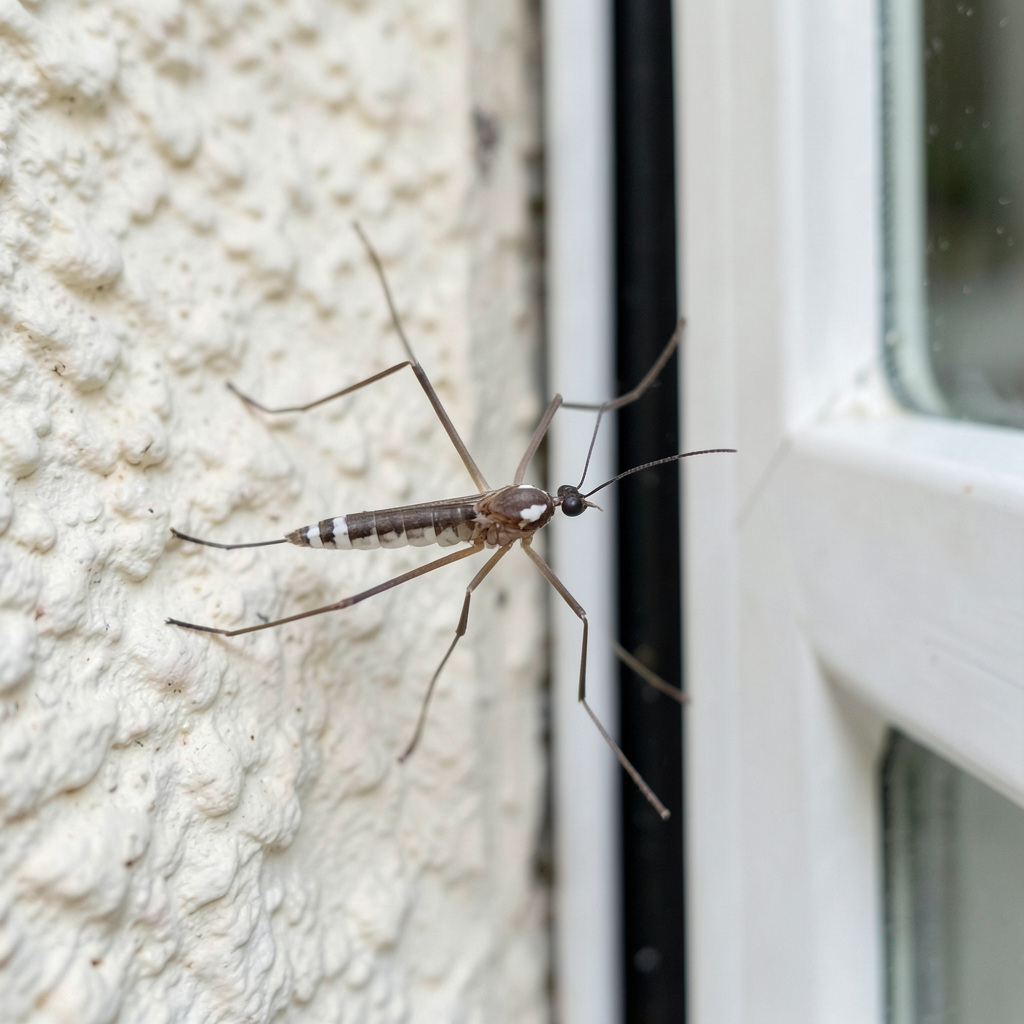

A disease-carrying mosquito species has been discovered breeding at homes in England for the first time, according to health authorities.
The Aedes aegypti mosquito, which spreads illnesses including dengue fever, Zika, and chikungunya, was identified at residential locations in east London, the UK Health Security Agency confirmed.
The insect has been detected in Britain on three previous occasions, though this marks the initial verification that the species has successfully reproduced within the country.
Health officials emphasised that public risk remains minimal.
The head of medical entomology and zoonoses ecology at the agency stated that while the mosquito transmits diseases in regions where such infections circulate, no human cases have been linked to these insects in Britain.
Nearby public spaces showed no signs of the mosquitoes or their larvae.
The specimens were discovered through the UKHSA’s Mosquito Watch programme.
Eradication efforts have been launched to eliminate the larvae.
The species typically inhabits tropical and subtropical zones and is not expected to endure Britain’s cooler temperatures long-term, notwithstanding recent periods of extreme warmth.
The expert explained that despite evidence of breeding activity in the locality and recent heatwaves, the mosquito has not become established nationwide.
The overall British climate remains too cold for sustained survival.
Authorities believe the insects entered the country through accidental transport.
The expert noted that invasive mosquitoes can travel in vehicles, luggage, and imported vegetation, potentially establishing themselves if environmental conditions prove suitable.
Enhanced monitoring and trapping operations have been expanded throughout the affected area.
Officials warned that rising global temperatures could result in more regular appearances of non-native mosquito species in coming years.
Residents are being encouraged to eliminate stagnant water sources from outdoor spaces, including buckets, containers, and plant pots, to reduce potential breeding sites.