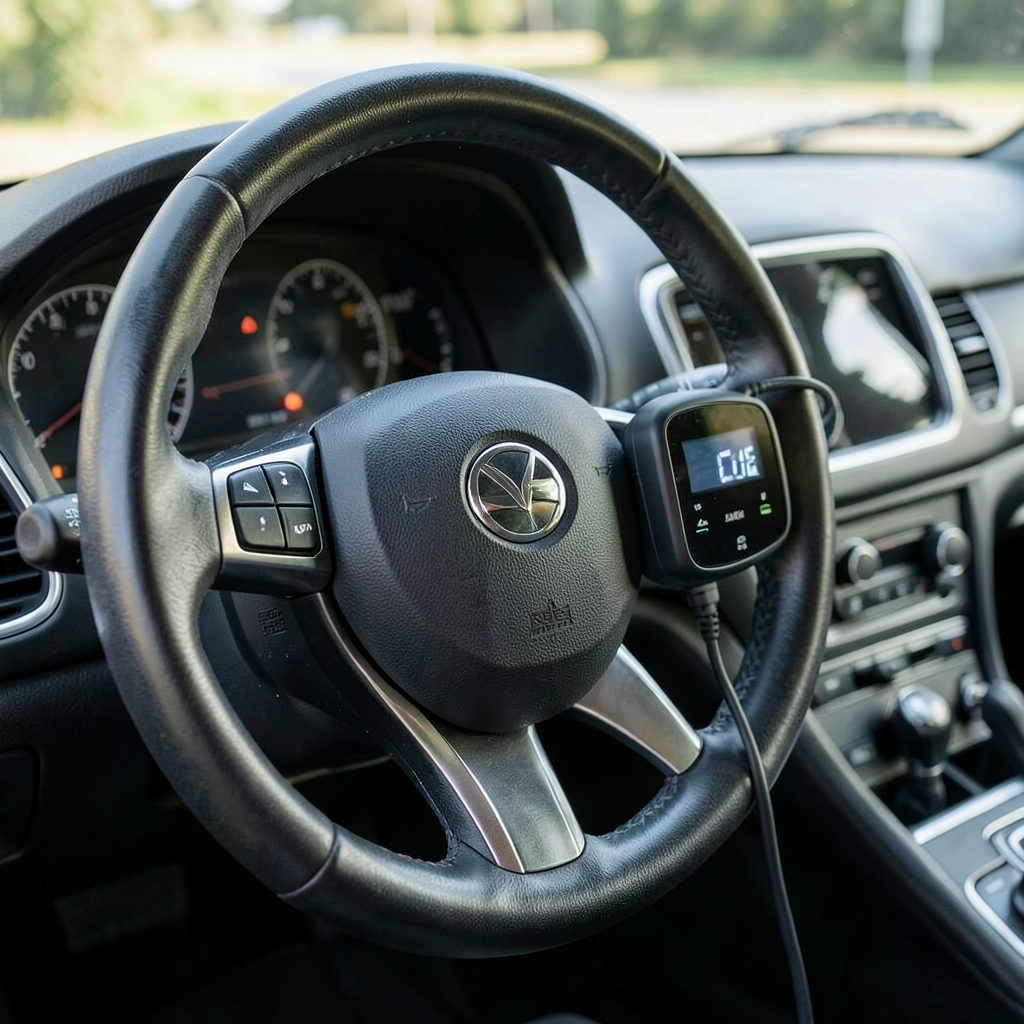

Senior police officers are urging the Prime Minister to mandate the use of alcolock devices for drivers convicted of serious alcohol-related road offences.
A coordinated coalition including the RAC, police and crime commissioners, road safety advocates and law enforcement leaders has dispatched an open letter to Number 10 calling for legislative change.
The proposal would compel high-risk offenders to install breathalyser technology linked to their vehicle’s starting mechanism before regaining road access.
Alcolocks function as integrated breath-testing units that immobilise vehicles when alcohol concentrations exceed predetermined thresholds.
The devices physically prevent individuals from operating motor vehicles following alcohol consumption.
Representatives from the RAC highlighted that drink-driving continues to represent one of the most avoidable causes of mortality and severe injury on British roads.
The organisation noted substantial public backing for requiring repeat or high-risk offenders to have the devices fitted before resuming driving privileges.
Government officials had previously indicated they would outline subsequent actions within a twelve-week period following closure of the Road Safety Strategy consultation, a timeframe that has now elapsed.
The letter emphasised that each additional postponement allows further preventable harm to occur.
Opposition politicians and advocacy groups contend that the Prime Minister’s prior endorsement of Vision Zero principles while serving as Greater Manchester’s elected mayor demonstrates commitment to eliminating road casualties.
They are requesting application of equivalent ambition nationwide through mandatory alcohol interlock requirements for persistent offenders.
The correspondence presses ministers to declare an alcolock initiative within the anticipated response to the motoring offences consultation.
Courts should receive discretionary authority to mandate device installation alongside supervision and corrective programmes for drink-drivers seeking to resume driving.
Existing statutes currently prohibit judicial imposition of such requirements on convicted individuals.
Multiple road safety bodies including the National Police Chiefs’ Council, RoSPA, Road Safety Great Britain and Brake have endorsed the communication.
Research from other nations indicates that alcolock implementation can reduce reoffending rates by as much as 70 percent.
Transport ministry figures document 220 fatalities and more than 1,500 serious injuries resulting from drink-driving incidents in 2024.
Government representatives have previously acknowledged that alcolocks could serve as an effective instrument for decreasing recidivism, pledging cooperative efforts to facilitate deployment should legislative approval be secured.
The push for intervention follows the administration’s failure to meet its own three-month commitment to release a summary of responses and prospective measures after the motoring offences consultation concluded.
Those proceedings incorporated suggestions for enhanced countermeasures against alcohol and drug-impaired driving.
The Department for Transport has indicated that consultations have concluded and officials are thoroughly examining the extensive volume of submissions prior to announcing future directions.
Ministers additionally explored potential reductions to the drink-drive threshold in England and Wales, including prospects for separate limits applicable to newly qualified motorists.
A departmental representative stated that operating vehicles whilst impaired by alcohol endangers all road users, with every collision involving an intoxicated driver representing a wholly avoidable catastrophe.
The emerging Road Safety Strategy consultation encompassed proposals for reduced alcohol limits and stricter enforcement mechanisms, including immediate suspension of suspected drink-drivers pending court proceedings and more severe sentencing guidelines.
Though not mandating universal alcolock adoption, officials consulted on potential applications aimed at curbing repeated instances of alcohol-impaired driving.