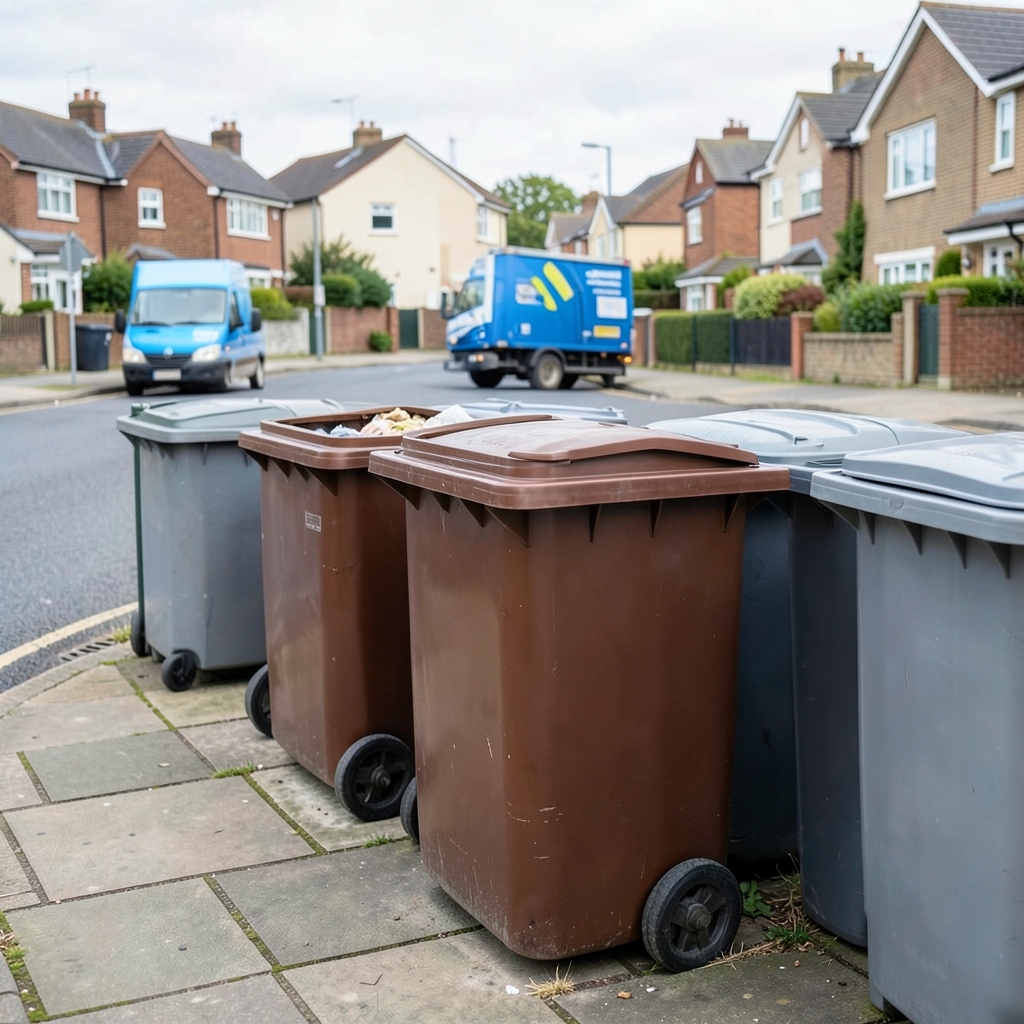

A local authority has launched a new weekly food waste collection initiative serving almost 25,000 households, with a total of 40,000 bins scheduled for distribution throughout the district.
Initial deliveries of kitchen caddies, liner rolls and outdoor food waste containers have been completed, with the collection service expected to commence imminently.
Additional equipment will be rolled out across the district over the coming months.
Residents have been advised against contacting the council for updates on delivery schedules, as all eligible households will automatically receive the necessary equipment.
The implementation was detailed in a social media post by the local authority, accompanied by footage of a local councillor inspecting preparations at a district depot.
The councillor confirmed that supplies were in place and ready for distribution to households across the area.
Participating properties will each be provided with a compact kitchen caddy, a supply of biodegradable liners and a dedicated outdoor container for food waste.
The kitchen caddy features a secure, lockable lid designed to contain odours and prevent access by insects or other pests.
Once the provided liners are exhausted, householders may use alternative biodegradable bags, conventional plastic bags or place food waste directly into the caddy before transferring it to the external container.
Acceptable materials for the scheme include surplus food, prepared and unprepared meals, meat products, seafood, bread items, dairy goods, tea bags, coffee residues, egg shells and uneaten pet food.
Materials prohibited from the collections include packaging, liquids, garden vegetation and cooking oils.
Collected organic waste will undergo processing via anaerobic digestion.
During this procedure, microorganisms decompose organic matter to generate biogas and digestate.
The biogas serves as a renewable energy source, while the digestate functions as a nutrient-rich soil amendment for agricultural applications.
The local authority has confirmed that the initiative forms part of national Simpler Recycling regulations, which mandate that all local authorities implement separate food waste collection services.
Central government funding is supporting the delivery of the programme.
The council highlighted that processing food waste through this method proves more economical than disposal via landfill or incineration.
While involvement in the scheme remains voluntary, the authority is actively urging residents to take part.
Officials emphasised that diverting even modest quantities of food waste from general disposal can contribute to reducing environmental harm and advancing the district’s recycling objectives.