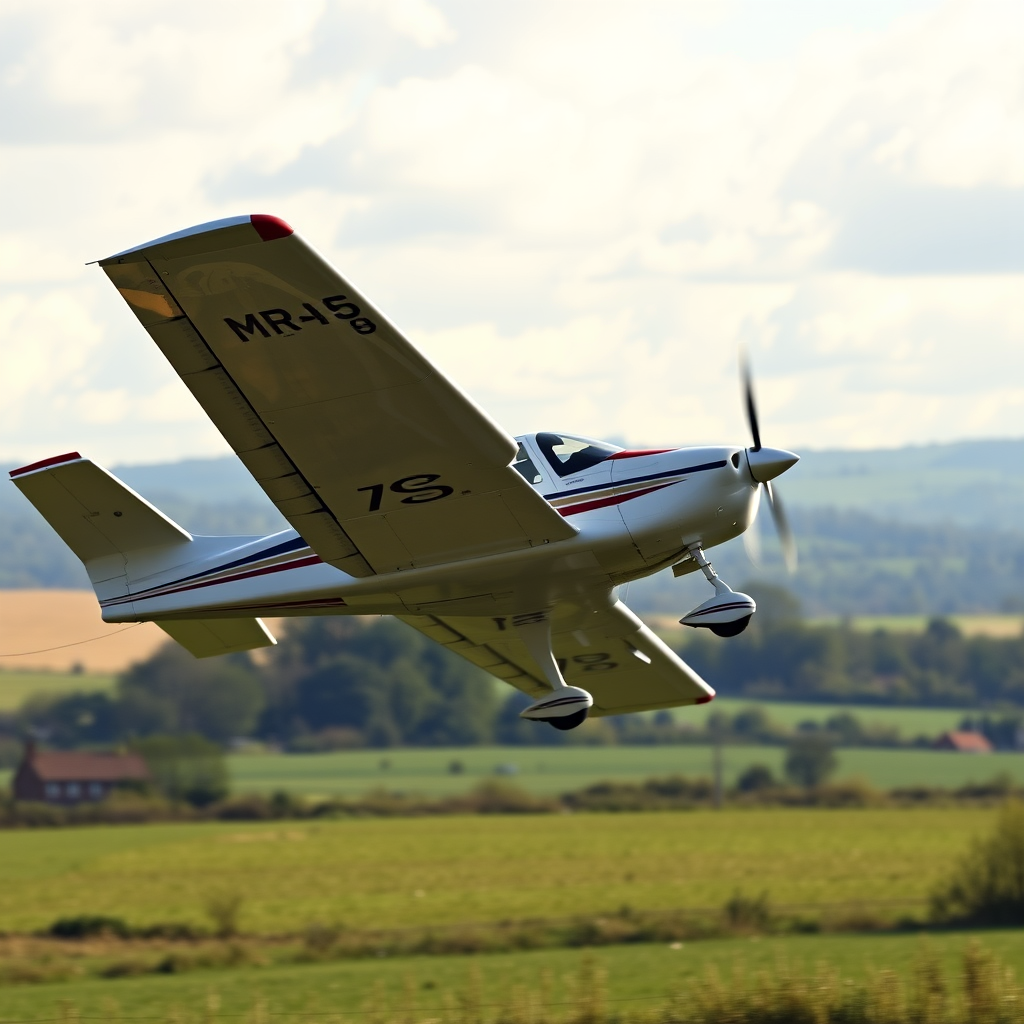

A 21-year-old aviator and a 24-year-old companion perished when the aircraft went down after the pilot failed to restore control following a spin manoeuvre, an official inquiry has found.
Matthew Bird, aged 21, and Oliver Dawes, aged 24, were pronounced dead at the scene of the incident involving a two-seater Cessna FRA150L machine in countryside close to Thorganby, north of York, on Sunday 28 July 2024.
According to a report released by the Air Accidents Investigation Branch on 30 April 2026, investigators established that the accident occurred as Mr Bird was unable to recover the aircraft while conducting aerobatic practice, despite being assessed as highly skilled by his instructors.
The document noted that the aircraft entered a fully developed spin to the left but, when recovery actions were commenced, the control column was not pushed far enough forward to un-stall the wing.
The investigation revealed that the aircraft carrying Mr Bird and Mr Dawes took off from Breighton Airfield at approximately 8.15am on the morning in question, notifying radar controllers of plans to conduct aerobatic exercises at altitudes between 3,000 and 6,000 feet.
Cockpit video footage displayed Mr Bird executing successful aerobatic sequences, before attempting the concluding left spin during which, despite his attempts, he could not regain mastery of the aircraft.
An emergency transmission was broadcast to air traffic controllers, yet the machine continued spinning until it impacted the terrain in a nose-down position, causing fatal injuries to both occupants.
The recording demonstrated that the engine remained operational throughout the entire flight, including during the final descent, and that neither occupant was equipped with parachutes, a factor that investigators stated made survival unlikely.
Further examination revealed that Mr Bird had been characterised by his instructors as a particularly competent pilot with an enthusiastic and conscientious attitude to flying, while noting that he had arrangements to commence additional instruction at Sherburn the day following the tragedy.
Despite these positive assessments, he possessed limited experience specifically in aerobatic operations and spinning techniques, with analysis indicating that while he had demonstrated rapid recovery capabilities during training exercises, he appeared taken aback when the aircraft failed to respond promptly to his recovery inputs.
Consequently, he did not recognise that the control column remained aft of neutral, signifying it had exceeded the point at which human intervention could restore control, and was consequently unable to stabilise the aircraft as it descended.
An AAIB representative stated that the pilot was recognised as sensible and conscientious with no indication this differed during the flight, adding that the incident alongside the CAA loss of control material illustrates how unexpectedly demanding multiple rotation spins can prove.
The spokesperson further noted that following this tragedy, the Civil Aviation Authority intended to distribute its safety awareness publication and accompanying footage regarding spin recognition and parachute utilisation to flight training establishments.
The Authority is also evaluating whether to incorporate psychological, behavioural and attitudinal elements into its curriculum.
In remarks provided at the time, Mr Dawes’ relatives commented that they had lost a beloved son, cousin, nephew and companion, with Oliver remaining alive in their hearts and recollections as the kind, generous, diligent and entertaining individual he had become. They expressed that he would be missed endlessly and that the family was devastated.
Mr Bird’s family stated they had lost their son, brother, grandson, nephew, cousin and friend, that Matthew had been incredibly important to many people, and that while utterly devastated, he would endure in their memories as they hold dear the remarkable recollections he had given them.